When I first heard the term “codependent,” I didn’t think much of it. I was independent—so very independent—maybe more than a tad hyper-independent. Certainly not codependent, whatever that was.
I associated the term with mushy, enmeshed couples whose lives revolve solely around one another—you know, the ones who have no interests outside of their romance—or extreme examples of maladaptive parents who raise their children to be reliant on them well into adulthood. I, on the other hand, had learned to rely solely on myself and maintained the practice with great rigidity in pretty much all of my relationships.
It wasn’t until I really dove into my mental health journey over the past six years that I began to learn more about codependence. There are differing opinions on its definition, but the one below is fairly broad and, therefore, felt uncontentious to share.
Codependency [is] a pattern of compulsive behaviors that is motivated by a dependence on another’s approval and is designed to find a sense of safety, identity, and self-worth. An essential characteristic of someone who is codependent is that they continually invest their self-esteem in the ability to control and influence behavior and feelings in others, as well as in themselves, even when faced with adverse consequences such as feelings of inadequacy after failure.
–Journal of Mental Health Counseling
As I began to understand attachment theory better, it was a revelation to discover the vast array of ways that codependence manifests and to begin recognizing it so readily in myself. It turned out that stubbornly clinging to my independence and need for control was one of many toxic distortions that codependence created within me.
As I began to speak more often with my therapist about codependence and recurring relationship issues, she eventually recommended trying out Codependents Anonymous (CoDA). Founded in 1986, CoDA is a 12-step program for people who share a common desire to develop functional and healthy relationships. CoDA distributes resources, such as the CoDA Blue Book (akin to Alcoholics Anonymous’s Big Book), and hosts countless virtual and in-person peer support groups.
Though their website’s references to a “Higher Power” and the 12-step program model made me wary—both for reasons too involved to discuss here—I eventually overcame my misgivings. I persuaded myself to move forward based on my trust in my therapist. I knew she would never refer me to an unsafe space or encourage me to continue participating in CoDA if it didn’t feel like the right fit.
I’ve also had many positive experiences with group work and peer-to-peer forums over the past few years. Even in a few situations where I didn’t necessarily agree with all aspects of an organization’s agenda, I was still able to learn a lot and make authentic connections. These past successes further encouraged me to try and keep an open mind.
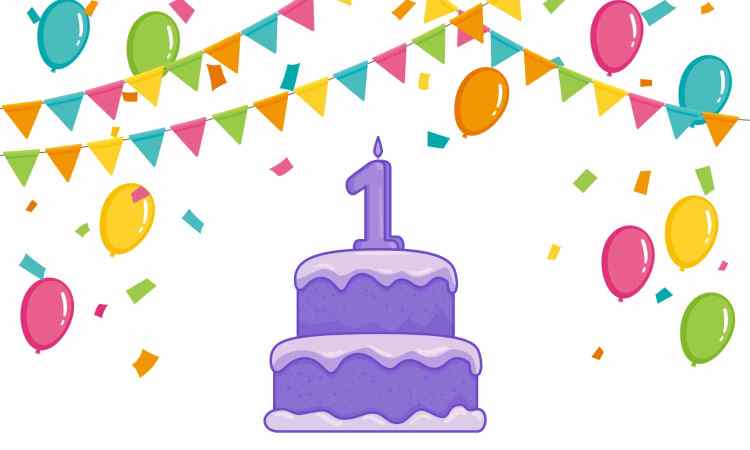
My first meeting was January 8, 2024 — which makes today what is referred to as my “CoDA birthday” — so, obviously, I’ve felt favorably about my involvement so far!
Since I like my mini-series so much, this anniversary is a good prompt to launch another one on topics related to codependence. For example, explaining what helped me feel comfortable diving in with CoDA, key lessons learned in my first year of recovery, surprises and struggles along the way, and sharing resources I’ve found helpful.
I’ll save all of that for future installments, though. For now, I just want to pause and bask in how tremendously proud I am of reaching this milestone. It’s so rare for me to give myself credit for my progress and the commitment and resolve it has required. So, for today: Happy CoDA birthday to me, indeed! More to come after I’m done basking in this milestone.
 hezhub.com