

Grounding is a term used to refer to strategies that help you focus your attention on the present moment. Related concepts include centering, anchoring, or, in the case of methods that electrically reconnect your body with the physical ground and soil, earthing.
There are a number of situations in which grounding, centering, anchoring, and/or earthing may be beneficial (e.g., athletes may use it to boost their performance) and there are countless strategies to explore (e.g., meditation, yoga, gardening, standing or walking barefoot). This post specifically deals with a resource that you can create for situations in which you need relief from stress, anxiety, or both: a grounding kit.
What is a Grounding Kit?
Whether you’re feeling nervous, worried, angry, or simply unbalanced, taking actions to ground your energy can help you become calm and better able to experience or manage your emotional state.
A grounding kit (sometimes referred to as a self-soothing toolkit or coping toolbox) compiles together physical objects that you can include in your grounding efforts.
Grounding methods that involve the five senses (sight, sound, taste, touch, and smell) may help interrupt disruptive or disturbing thoughts and symptoms so consider including at least two items for each sense in your grounding kit. Some people may respond more to one sense or a few, however, so consider what appeals the most to you as you create your grounding kit and stock it more heavily with items relevant to that sensory area.
There are no “right” or “wrong” objects to include in a grounding kit and what works for one person may frustrate or even trigger another person. For example, if you have extreme sensitivities to noises and sounds, then a loud wind-up toy or popping bubble wrap is the opposite of helpful even if it’s the go-to strategy for someone else.
Making Your Own Grounding Kit
Although a number of vendors sell ready-made grounding kits, such as these products available on Etsy and Amazon, they’re easy to make yourself. You may also consider creating two grounding kits: one that stays at home and includes bulkier objects and a separate mobile kit with fewer items that you can take anywhere.
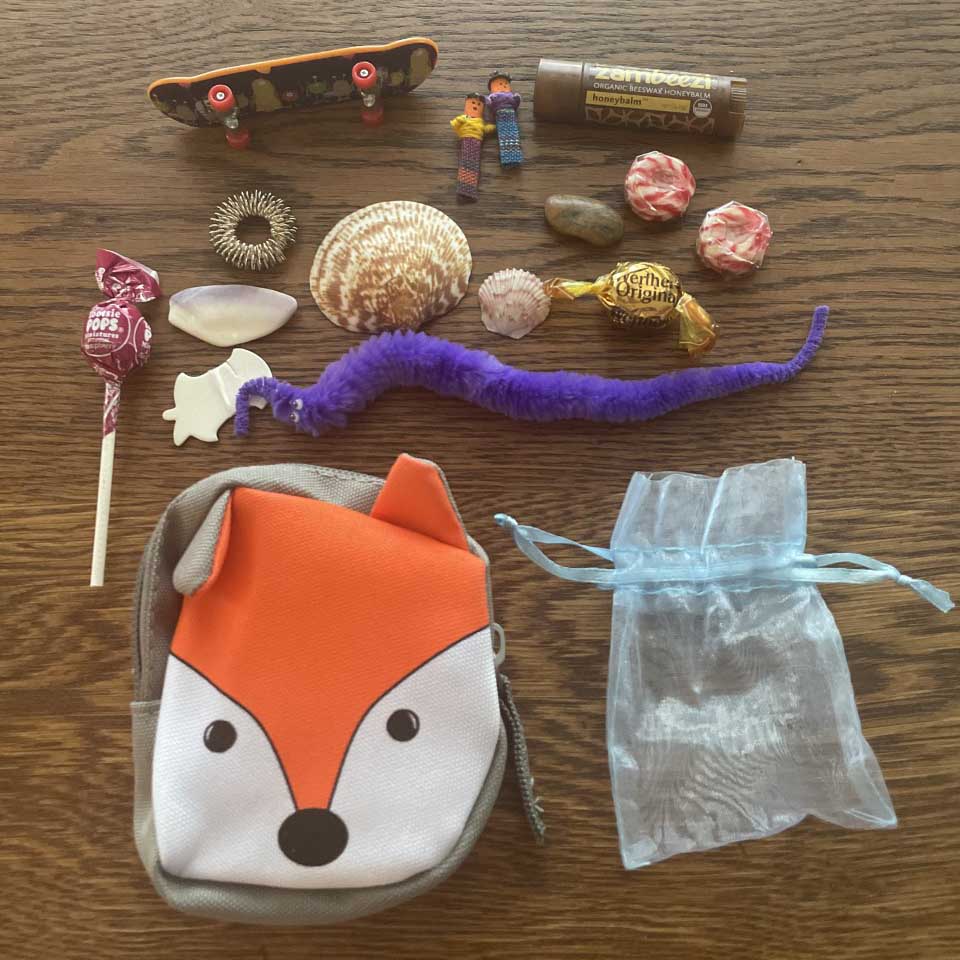
First, simply choose a bag, box, or other receptacle; you’ll ideally want something small enough size to carry around with you in a pocket, purse, or glove compartment. Next, compile your grounding objects. You may already have plenty of the useful supplies at home, but it’s also possible to invest in grounding objects on a slim budget even if you find yourself needing to make purchases or feel more inspired by the act of investing in compiling your kit from scratch. I recommend cruising the aisles at your local thrift store in either case, there’s no need to make this an expensive project!
Below is a list of items corresponding to each sense that you may consider including in yours.
SIGHT
- Photographs
- Postcards
- Color swatches
- Construction Paper
- Colored pencils, markers, or crayons
SOUND
- A pair of headphones
- Mini singing bowl
- Bubble wrap
- Toys that make noise
- Music box
TASTE
- Chapstick or lip balm
- Tea bags (especially herbal blends)
- Mints
- Candy
- Chocolate
TOUCH
- Fidget items, such as spinners, cubes, and jewelry
- Weighted blanket
- Dice to roll
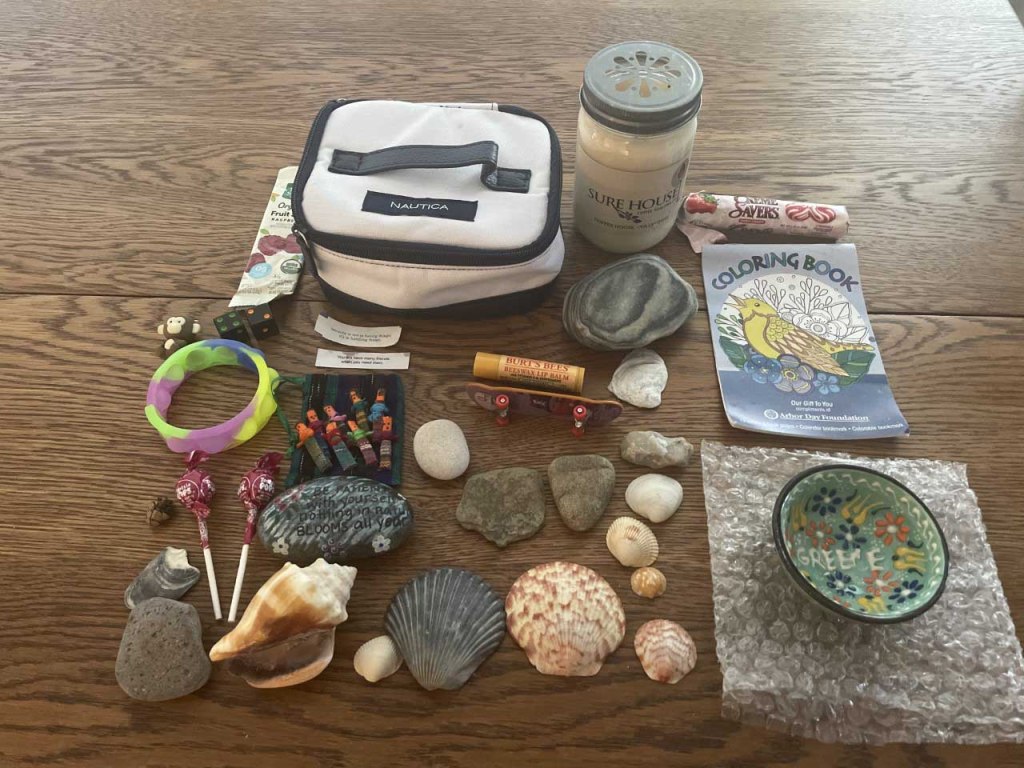
- Natural objects like rocks, shells, and pine cones
- Items with varied textures like a marble, sandpaper, feathers, pom-poms
SMELL
- Essential oils, such as peppermint, lavender, and citrus scents
- Candles
- Lotion
- Jar of spices
- Fragrance sachet
Using Your Grounding Kit
Once your grounding kit is ready, try to have it with you and accessible as much as possible. Although you can use it as often or infrequently as you like, the more you practice engaging with your objects, the greater the chance is that this technique will benefit you in periods of heightened stress. I suggest spending up to five minutes per day for the first week or two exploring your kit and seeing which items you respond to most; you can always add or remove contents to suit your style and needs.
The ideal use of a grounding kit arises when you feel yourself reaching about a 3 or 4 on a scale of 1 – 10, with 10, as opposed to waiting until you’re experiencing big emotions or duress. But it’s natural to sometimes miss our mind and body’s cues about stress until it’s already elevated. And it’s common for folks – like me! – to forget to use their kits sometimes. So, don’t be hard on yourself if you find yourself at a level 10 before reaching for it or forgetting altogether – it happens!
Finally, remember that the purpose of the grounding kit isn’t to avoid your problems or get rid of your emotions. Feelings are important and should not be ignored! But this nifty little resource may allow you to take a step back from stressors and triggering situations so that you can hopefully regroup and reapproach the circumstance in a calmer, healthier way.
Disclaimer: Hez is not a doctor or mental health professional. The information provided in this post is for educational and informational purposes only.
 hezhub.com