

In 2020, I navigated the pandemic, a divorce, a new job, plodding through a master’s program, serving as a board president in a time of organizational crisis, and more. I kept the stress mostly at bay through a variety of healthy (lots of exercise, long hikes in nature, frequent bike rides) and unhealthy (excessive drinking, overworking, disassociating) coping mechanisms.
In 2021, a few new stressors joined the mix and I finally reached my breaking point. All the pent-up feelings of overwhelm, despair, grief, and helplessness hit at once. Although this deluge of heaviness is not why I quit my job that November, it turned out to be a well-timed transition. I was so burnt out and weary at the time that I could barely keep my head on straight for enough hours of the day to maintain consistent productivity.
While the ensuing meltdown was understandable, the propensity of it was quite alarming. My sleep became erratic. My hair began to fall out from the stress. I struggled to maintain a healthy diet, oscillating between lacking the energy to prepare or eat regular meals and binging on snacks and sugary treats. I cried for many hours of the day, frequently unprompted sobbing sessions that arose from no direct cause.
I was unemployed aside from my pet and house-sitting business, I was supposed to be hard at work on several projects. First and foremost, building a more robust income pipeline. I didn’t want a full-time job, so I could preserve mental bandwidth for personal pursuits, but I knew the sitting business wouldn’t be enough to keep me afloat.
Plus there was the matter of all of those aforementioned personal pursuits: I wanted to be writing, practicing piano, strengthening my voice, making music, and developing a business idea. None of these are small undertakings in the best of times, so trying to take them all on while emotionally unstable led to feeling even more tapped out and dysregulated. Such a productive, overachieving person up to that point, finding myself incapable of maintaining my usual ‘go-go-go’ energy left me feeling completely broken. There was a profound disappointment in finally making space for myself to think big and chase my dreams, but instead experiencing stagnation.
Despite regularly berating myself for squandering the opportunity to transform my life, it didn’t escape my attention that I was navigating a tumultuous personal period overlapping a global disaster. My rational mind knew it made sense to be having a tough time, especially given the “put a pin in it” and “keep it moving” approach I’d enlisted instead of dealing with complicated feelings as they arose. Of course they would eventually bubble up to the surface – no surprise there, really.
Yet, there was also a recognition that something was wrong. Really, really wrong. As I looked back on my life, I observed other periods when I’d similarly lost the ability to function in my usual ways. They’d likewise begun with extended periods of heightened stress that I tried to push through. In one of those stretches, I’d also been overworked and slipped into burnout.
We repeat what we don’t repair.
Christine langley-obaugh
The situations hadn’t been quite as dramatic, but the cycle was recognizable. It was clearly beyond time to get some help. I had a terrible insurance plan, and it was near the end of the year, so I decided to start with the cheapest, most readily available intervention: medication. My PCP had already suggested for the previous two years that she thought I might be depressed. I acknowledged the likelihood the first time and confirmed it with certainty the second. So, she was quick to offer a prescription when I suggested I needed something. Based on my desire for a non-addictive option that I wouldn’t plan to take forever, she recommended Wellbutrin.
The medication was helping very little when the new year and better insurance arrived. I began therapy with a counselor who came highly recommended by a friend. Around the same time, I started to see more and more content on my social media feeds about ADHD – surely a result of me watching one video, then liking a meme or something like that, and the algorithm then deciding to flood me with related topics. As I took in the flow of information, many things began to click into place.
ADHD runs in my bloodline big time; my half-sisters’ three children all have it, along with countless cousins on both sides of my family. On the one hand, it shouldn’t have struck me as such a huge surprise that this diagnosis was possible. On the other hand, I grew up in an era when most folks learned certain notions of what ADHD looked like – it was not a lifelong straight-A student, accomplished nonprofit professional, and overly organized project manager who delighted in color-coded calendars, planning spreadsheets, and so on.
Despite my misgivings, I kept digging. The more I learned about emotional regulation issues ADHDers often have, the more the possibility of being neurodivergent resonated with me because I’d had BIG emotions my whole life. When they were of the negative sort, I often had a hard time shaking them off or compartmentalizing the feelings so that they didn’t impact all other areas of my life. I also encountered information implying that while I could perform fine in a structured setting like school or a job, executive function difficulties could explain why I was struggling to make a plan and get on track in the less-defined areas of creativity and entrepreneurship I was pursuing.
Although I was nervous about coming across as someone using Google to diagnose themself, I finally felt it was time to raise this with my counselor. She didn’t have the credentials to diagnose ADHD, but she ran me through a few questionnaires and assessments that placed me on the borderline of it being a solid likelihood and suggested I see a psychiatrist to explore further.
I took her up on the advice but found myself disappointed by the experience. The guy I wound up seeing was not the best fit for me. I felt rushed in our appointments because he often interrupted or cut me off. And though it was no fault of his own, he could rarely field my questions with concrete answers nor offer a diagnosis with any certainty. The reality is that many disorders have overlapping symptoms or may coexist, so no matter how much training a person has, it can be challenging to suss out what’s going on, especially one in the midst of a period of distress like I was.
Administering the same questionnaires my therapist used and a few additional ones, he decided that while there was a possibility I had ADHD, I may instead be demonstrating the symptoms because of a major depressive episode. Since putting me on the wrong ADHD meds could create even more of a tailspin, he decided to hedge on the side of caution and prescribe something to treat my depression first. Thus, I wound up on Zoloft atop Wellbutrin.
This change in my care plan had a few benefits, but far more cons than pros. Zoloft seemed to mitigate the state of emergency my nervous system was in. The regulation issues with my sleep began to calm down a bit; although I was often exhausted from the medication, I was at least sleeping through the night more often. I also saw a mild improvement in my eating habits – the binging still occurred occasionally, but the “I’m too depressed to even think about hunger or cooking” piece subsided. The most significant change was the extremity of my sobbing sessions. I still cried every day, sometimes multiple times per day. But it was no longer the majority of the day, and when the episodes came, the feelings of despair were less heightened.
Despite these strides in the right direction, I was ready to get the heck off of Zoloft about six months later because of its interaction with my energy, mood, and personality. Although I had issues maintaining regular exercise before taking it, once on Zoloft, I could barely even motivate myself to go hiking and biking. I knew these activities, which I enjoy a lot, helped both my body and mind, and I’d never before had trouble feeling inspired to do them. While it was helpful that the drug diminished the strength of my negative emotions, it seemed to be flattening my whole mood and I felt listless, barely even possessing the energy to call a friend, read a book, or do much but lounge around with whatever cats or dogs I happened to be pet-sitting.
The psychiatrist agreed with my assessment that Zoloft wasn’t the solution and supported my plan to take a break from pharmaceuticals to let my brain reset before attempting other interventions. Meanwhile, I stayed in touch with my counselor, read lots of self-help books, and continued my meditation practice. I also joined a gym in hopes that the financial investment would motivate me to visit often enough to get back on top of physical fitness.
While my many efforts were undoubtedly helping with my depression, my ability to concentrate and focus was still unsteady. From what I’d been learning in my ADHD research, the ever-changing environments of my living situation due to my nomadic lifestyle were not helping matters. But even that aside, it felt like the different strategies I was experimenting with weren’t getting my cognitive functioning where I needed to be. Once I felt like my brain had a chance to purge the Zoloft and reset, I returned to my psychiatrist seeking an ADHD-specific prescription.

During my visit, he reinforced how trial and error the process of finding the right medication can be. While I showed signs of ADHD, he still wasn’t certain enough to offer a diagnosis. He also noted that each of the disorder’s variations requires different treatments. Some meds provide norepinephrine, whereas some promote higher serotonin by limiting the brain’s reuptake, and others interact with dopamine levels. Each person’s brain chemistry also impacts how they experience a medication, regardless of its intended mechanics.
Again, hedging on the side of caution, he recommended Straterra. Rather than going straight to stimulants, he appealed to my desire to avoid addictive medications if possible. He also considered it a beneficial choice for residual depression since, although I was feeling more stable, I was hardly back to my usual self.
The four months that followed were very much a failed experiment. It’s hard to say whether Straterra improved my focus and concentration, perhaps mildly, but nothing groundbreaking. But what it did do, more often than not, was make me incredibly nauseous. On some occasions, particularly at the beginning, the stomach upset was accompanied by excessive sweating – like the kind of sweating provoked by the worst fever imaginable, which beaded up over all areas of my skin profusely enough to start rolling down my body. This extreme reaction only lasted one or two hours when it occurred, but it was so intense that I’d require a few changes of clothing before it passed. On the worst days, I’d have to nap to recover from my body’s shock to taking the medication, which certainly didn’t help boost my productivity.
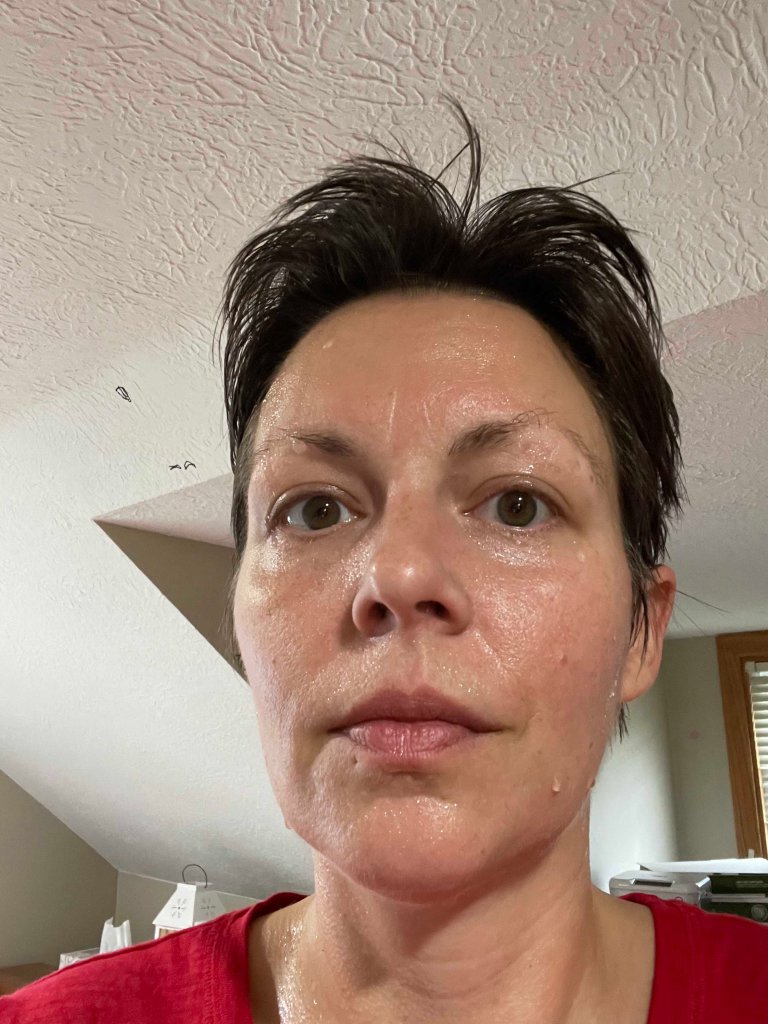
I tried to keep an open mind and hope that I would eventually acclimate and the situation would improve. I was especially inclined to keep pressing forward because I was on my cross-country road trip and unable to schedule an appointment with my psychiatrist while out of state. But then, one day while feeling especially frustrated, I began researching Straterra more. I read that it’s not only common for people to have adverse reactions to it, but furthermore, it’s often hard to get people up to doses of it high enough to provide therapeutic value because of all of the side effects. Next, I learned that the 800 milligrams per day I was prescribed was 100 milligrams below the threshold of what is typically considered an optimal dose.
“That’s it,” I thought at the time. “Fuck this, I’m done.”
And so began another period of clearing a med out of my system and giving my brain a chance to reset. The question then became whether it was even worth trying something else. At this point, all the mental health work I was doing in other arenas was beginning to have a more noticeable effect. I was still struggling with some stuff, but throwing a wrench into my progress with another failed attempt at a new medication filled me with trepidation.
Around this time, I also began learning about other possible explanations for my difficulties. I started wondering if I even actually had ADHD or if something else was going on. Or if I did have it, was it just ADHD, or was there more to the story?
These were mildly anxiety-evoking thoughts, but it was far more worrisome to consider the possibility of trying another new med in a process of elimination approach that was potentially targeting an incorrect diagnosis. Rather than taking that route, I decided to shell out a ridiculous amount of money to undergo a thorough neuropsychological evaluation. Stay tuned for the next installment to learn more about what the evaluation entailed and its findings.
 hezhub.com
WOW!!! A bus strike !!!! and a long journey !!! Glad you are self activated and searching ! Take care 1 Aunt Jane
LikeLiked by 1 person