In September, I had the pleasure of attending my first meditation retreat. The experience differed from what many folks may imagine when thinking of a retreat because it was virtual. But I still found the day to be inspiring and profound.
Amongst other positive impacts, this retreat reinvigorated my commitment to living mindfully, an endeavor that had become less focused and earnest since completing a Mindfulness-Based Stress Reduction (MBSR) program in early August. (You can read more about MBSR in my blog post here.) I’d kept up a daily meditation practice, but the sessions seemed to be getting shorter and shorter. I also missed the weekly informal practices recommended by the MBSR program, which involved incorporating mindfulness into different activities besides meditating and logging daily written reflections.
The retreat that I attended was eight hours long. The host gave an overview of the day’s activities before jumping into the itinerary, which included:
Unguided sitting meditation
Unguided mindful stretching
Guided body scan while lying down
Presentation about the purpose and benefits of mindfulness
Guided sitting meditation focused on the breath
Lunch break for mindful eating
Guided lovingkindness meditation while lying down
Poetry readings
Unguided mindful walking
Presentation about maintaining a mindful presence
Guided sitting mountain meditation
Mindful journaling
Small-group reflections
I enjoyed and valued the experience so much that I wanted more days like this. Given my budget and travel lifestyle, however, seeking out regular retreats, whether in-person or virtual, wasn’t feasible. So, I decided to go the DIY route. What this entails for me is blocking one day per month on the calendar as “RETREAT DAY!” — the caps, exclamation point, and red color-coding serve to remind me that this is a sacred commitment I’ve made to myself and not some negotiable time set aside.
“It is indeed a radical act of love just to sit down and be quiet for a time by yourself.”
Jon Kabat-Zinn
Although I scheduled the recurring event for the second Sunday of each month, I permit myself to move it to any day of the month as other demands of my time require. The important thing is not when it happens, just that it does. I’m also extending flexibility to myself in the length. I aim to have one eight-hour DIY retreat per quarter, with the other two months being a minimum of four.
Outside of those hours, I’d love for the entire day to be mindful, which for me means:
No cellphone usage during retreat hours, except for the Insight Timer and Breathwrk apps. Limited cellphone usage for the remainder of the day, with “Do Not Disturb” mode on.
Laptop usage restricted to retreat activities during blocked hours. I only use it for journaling or creative projects, like writing or recording music, for the remainder of the day.
No speaking during the active retreat hours, except for interactions with animals in my care, reading poems, or speaking mantras aloud.
No multi-tasking the entire day, e.g., listening to an audiobook while walking, watching a YouTube video while cooking, doing vocal exercises in the shower, etc.
No to-do list or commitments.
No social media.
No junk food.
My approach may change in the future, but these parameters are a realistic and manageable starting point. I also aim to do a few other things to set myself up for success:
Get at least eight hours of sleep the night before.
Plan my meals the day before and even prep things if possible.
Curate the content ahead of time — this doesn’t mean listening to or practicing everything, but I aim to queue up my web browser beforehand.
Wear loose, comfortable clothes.
Have pillows, blankets, and yoga blocks readily available.
Like retreat experiences of any kind, the structure, topics, and practices will vary. October 8th was my first go at this undertaking, and I thought I’d share the flow of my day with folks interested in establishing a similar practice.
Log the day’s activities in my tracking apps (Finch Care, Habits, How We Feel)
Respond to select missed text messages
Read in bed
I’d love to hear from you if you already do DIY retreats or if you try one after reading this! Drop me a line using the Contact form, email hello@hezhub.com, or leave a comment below to let me know about your experience and share any recommendations you have for my next go-round in November.
In 2020, I navigated the pandemic, a divorce, a new job, plodding through a master’s program, serving as a board president in a time of organizational crisis, and more. I kept the stress mostly at bay through a variety of healthy (lots of exercise, long hikes in nature, frequent bike rides) and unhealthy (excessive drinking, overworking, disassociating) coping mechanisms.
In 2021, a few new stressors joined the mix and I finally reached my breaking point. All the pent-up feelings of overwhelm, despair, grief, and helplessness hit at once. Although this deluge of heaviness is not why I quit my job that November, it turned out to be a well-timed transition. I was so burnt out and weary at the time that I could barely keep my head on straight for enough hours of the day to maintain consistent productivity.
While the ensuing meltdown was understandable, the propensity of it was quite alarming. My sleep became erratic. My hair began to fall out from the stress. I struggled to maintain a healthy diet, oscillating between lacking the energy to prepare or eat regular meals and binging on snacks and sugary treats. I cried for many hours of the day, frequently unprompted sobbing sessions that arose from no direct cause.
I was unemployed aside from my pet and house-sitting business, I was supposed to be hard at work on several projects. First and foremost, building a more robust income pipeline. I didn’t want a full-time job, so I could preserve mental bandwidth for personal pursuits, but I knew the sitting business wouldn’t be enough to keep me afloat.
Plus there was the matter of all of those aforementioned personal pursuits: I wanted to be writing, practicing piano, strengthening my voice, making music, and developing a business idea. None of these are small undertakings in the best of times, so trying to take them all on while emotionally unstable led to feeling even more tapped out and dysregulated. Such a productive, overachieving person up to that point, finding myself incapable of maintaining my usual ‘go-go-go’ energy left me feeling completely broken. There was a profound disappointment in finally making space for myself to think big and chase my dreams, but instead experiencing stagnation.
Despite regularly berating myself for squandering the opportunity to transform my life, it didn’t escape my attention that I was navigating a tumultuous personal period overlapping a global disaster. My rational mind knew it made sense to be having a tough time, especially given the “put a pin in it” and “keep it moving” approach I’d enlisted instead of dealing with complicated feelings as they arose. Of course they would eventually bubble up to the surface – no surprise there, really.
Yet, there was also a recognition that something was wrong. Really, really wrong. As I looked back on my life, I observed other periods when I’d similarly lost the ability to function in my usual ways. They’d likewise begun with extended periods of heightened stress that I tried to push through. In one of those stretches, I’d also been overworked and slipped into burnout.
We repeat what we don’t repair.
Christine langley-obaugh
The situations hadn’t been quite as dramatic, but the cycle was recognizable. It was clearly beyond time to get some help. I had a terrible insurance plan, and it was near the end of the year, so I decided to start with the cheapest, most readily available intervention: medication. My PCP had already suggested for the previous two years that she thought I might be depressed. I acknowledged the likelihood the first time and confirmed it with certainty the second. So, she was quick to offer a prescription when I suggested I needed something. Based on my desire for a non-addictive option that I wouldn’t plan to take forever, she recommended Wellbutrin.
The medication was helping very little when the new year and better insurance arrived. I began therapy with a counselor who came highly recommended by a friend. Around the same time, I started to see more and more content on my social media feeds about ADHD – surely a result of me watching one video, then liking a meme or something like that, and the algorithm then deciding to flood me with related topics. As I took in the flow of information, many things began to click into place.
ADHD runs in my bloodline big time; my half-sisters’ three children all have it, along with countless cousins on both sides of my family. On the one hand, it shouldn’t have struck me as such a huge surprise that this diagnosis was possible. On the other hand, I grew up in an era when most folks learned certain notions of what ADHD looked like – it was not a lifelong straight-A student, accomplished nonprofit professional, and overly organized project manager who delighted in color-coded calendars, planning spreadsheets, and so on.
Despite my misgivings, I kept digging. The more I learned about emotional regulation issues ADHDers often have, the more the possibility of being neurodivergent resonated with me because I’d had BIG emotions my whole life. When they were of the negative sort, I often had a hard time shaking them off or compartmentalizing the feelings so that they didn’t impact all other areas of my life. I also encountered information implying that while I could perform fine in a structured setting like school or a job, executive function difficulties could explain why I was struggling to make a plan and get on track in the less-defined areas of creativity and entrepreneurship I was pursuing.
Although I was nervous about coming across as someone using Google to diagnose themself, I finally felt it was time to raise this with my counselor. She didn’t have the credentials to diagnose ADHD, but she ran me through a few questionnaires and assessments that placed me on the borderline of it being a solid likelihood and suggested I see a psychiatrist to explore further.
I took her up on the advice but found myself disappointed by the experience. The guy I wound up seeing was not the best fit for me. I felt rushed in our appointments because he often interrupted or cut me off. And though it was no fault of his own, he could rarely field my questions with concrete answers nor offer a diagnosis with any certainty. The reality is that many disorders have overlapping symptoms or may coexist, so no matter how much training a person has, it can be challenging to suss out what’s going on, especially one in the midst of a period of distress like I was.
Administering the same questionnaires my therapist used and a few additional ones, he decided that while there was a possibility I had ADHD, I may instead be demonstrating the symptoms because of a major depressive episode. Since putting me on the wrong ADHD meds could create even more of a tailspin, he decided to hedge on the side of caution and prescribe something to treat my depression first. Thus, I wound up on Zoloft atop Wellbutrin.
This change in my care plan had a few benefits, but far more cons than pros. Zoloft seemed to mitigate the state of emergency my nervous system was in. The regulation issues with my sleep began to calm down a bit; although I was often exhausted from the medication, I was at least sleeping through the night more often. I also saw a mild improvement in my eating habits – the binging still occurred occasionally, but the “I’m too depressed to even think about hunger or cooking” piece subsided. The most significant change was the extremity of my sobbing sessions. I still cried every day, sometimes multiple times per day. But it was no longer the majority of the day, and when the episodes came, the feelings of despair were less heightened.
Despite these strides in the right direction, I was ready to get the heck off of Zoloft about six months later because of its interaction with my energy, mood, and personality. Although I had issues maintaining regular exercise before taking it, once on Zoloft, I could barely even motivate myself to go hiking and biking. I knew these activities, which I enjoy a lot, helped both my body and mind, and I’d never before had trouble feeling inspired to do them. While it was helpful that the drug diminished the strength of my negative emotions, it seemed to be flattening my whole mood and I felt listless, barely even possessing the energy to call a friend, read a book, or do much but lounge around with whatever cats or dogs I happened to be pet-sitting.
The psychiatrist agreed with my assessment that Zoloft wasn’t the solution and supported my plan to take a break from pharmaceuticals to let my brain reset before attempting other interventions. Meanwhile, I stayed in touch with my counselor, read lots of self-help books, and continued my meditation practice. I also joined a gym in hopes that the financial investment would motivate me to visit often enough to get back on top of physical fitness.
While my many efforts were undoubtedly helping with my depression, my ability to concentrate and focus was still unsteady. From what I’d been learning in my ADHD research, the ever-changing environments of my living situation due to my nomadic lifestyle were not helping matters. But even that aside, it felt like the different strategies I was experimenting with weren’t getting my cognitive functioning where I needed to be. Once I felt like my brain had a chance to purge the Zoloft and reset, I returned to my psychiatrist seeking an ADHD-specific prescription.
During my visit, he reinforced how trial and error the process of finding the right medication can be. While I showed signs of ADHD, he still wasn’t certain enough to offer a diagnosis. He also noted that each of the disorder’s variations requires different treatments. Some meds provide norepinephrine, whereas some promote higher serotonin by limiting the brain’s reuptake, and others interact with dopamine levels. Each person’s brain chemistry also impacts how they experience a medication, regardless of its intended mechanics.
Again, hedging on the side of caution, he recommended Straterra. Rather than going straight to stimulants, he appealed to my desire to avoid addictive medications if possible. He also considered it a beneficial choice for residual depression since, although I was feeling more stable, I was hardly back to my usual self.
The four months that followed were very much a failed experiment. It’s hard to say whether Straterra improved my focus and concentration, perhaps mildly, but nothing groundbreaking. But what it did do, more often than not, was make me incredibly nauseous. On some occasions, particularly at the beginning, the stomach upset was accompanied by excessive sweating – like the kind of sweating provoked by the worst fever imaginable, which beaded up over all areas of my skin profusely enough to start rolling down my body. This extreme reaction only lasted one or two hours when it occurred, but it was so intense that I’d require a few changes of clothing before it passed. On the worst days, I’d have to nap to recover from my body’s shock to taking the medication, which certainly didn’t help boost my productivity.
I tried to keep an open mind and hope that I would eventually acclimate and the situation would improve. I was especially inclined to keep pressing forward because I was on my cross-country road trip and unable to schedule an appointment with my psychiatrist while out of state. But then, one day while feeling especially frustrated, I began researching Straterra more. I read that it’s not only common for people to have adverse reactions to it, but furthermore, it’s often hard to get people up to doses of it high enough to provide therapeutic value because of all of the side effects. Next, I learned that the 800 milligrams per day I was prescribed was 100 milligrams below the threshold of what is typically considered an optimal dose.
“That’s it,” I thought at the time. “Fuck this, I’m done.”
And so began another period of clearing a med out of my system and giving my brain a chance to reset. The question then became whether it was even worth trying something else. At this point, all the mental health work I was doing in other arenas was beginning to have a more noticeable effect. I was still struggling with some stuff, but throwing a wrench into my progress with another failed attempt at a new medication filled me with trepidation.
Around this time, I also began learning about other possible explanations for my difficulties. I started wondering if I even actually had ADHD or if something else was going on. Or if I did have it, was it just ADHD, or was there more to the story?
These were mildly anxiety-evoking thoughts, but it was far more worrisome to consider the possibility of trying another new med in a process of elimination approach that was potentially targeting an incorrect diagnosis. Rather than taking that route, I decided to shell out a ridiculous amount of money to undergo a thorough neuropsychological evaluation. Stay tuned for the next installment to learn more about what the evaluation entailed and its findings.
November 4, 2008, was a historic day that every American remembers because we elected our first Black president. For me, that date became unforgettable for an entirely different reason: I got hit by a bus.
When recounting the tale, I usually tell people next that it wasn’t quite as dramatic as it sounds. But this doesn’t suggest it wasn’t dangerous, traumatic, and damaging. It’s more so that I know what people picture when they imagine a person hit by a bus is way more gruesome than the aftermath of my experience. I can see this assumption flash across their faces in the moment between stating that a bus hit me and then explaining that it could have been much worse.
And it’s true – it could have been MUCH worse. I’m pretty much the luckiest unlucky (or most unlucky lucky?) person I know in many ways, with this accident being the exclamation point on that sentiment. Not only did I stand up on my own two feet within moments of the incident, but I managed to escape the situation without a single broken bone or requiring stitches. Aside from some road rash abrasions in a few places, I wasn’t even bleeding. I mean, seriously — what are the chances?!
Nonetheless, I required a lengthy recovery before I could resume my normal life. Even to this day, fifteen years later, I must maintain my body carefully and diligently to keep it functioning without pain. Truth be told, the emotional and financial trauma was probably even more harmful and difficult to recover from than the physical impact.
Folks always have a lot of questions about the experience. Atop addressing the usual wonderings, this new series of posts offers me a chance to reflect on everything I’ve navigated, learned, and had to heal from since becoming the “Local Woman Hit by Bus” (as the caption under my face read when I appeared on a local news broadcast).
This first post covers some of the basics, with more to come. If there’s anything in particular that you’re curious about, feel free to drop me a line using the form on the Contact tab or email hello@hezhub.com.
The odds of getting hit by a bus are 495,000 to 1.
How on earth did I manage to get hit by a bus?
Your guess is as good as mine! I have no idea how the driver failed to see me. Here’s how it went down:
I was in Downtown Pittsburgh, smoking my ritualistic post-work cigarette en route to my bus stop a few blocks away. The side of the intersection on Fifth and Liberty Avenues that I was on has a three-lane road to cross, so it’s relatively wide with a small cement divider between the right turn lane and the two others. Of note is that there was (and, I believe, still is) no walk signal there; pedestrians instead follow the cues of the traffic signal and thus possess the right of way on green.
When I arrived at this intersection, which I had crossed countless times while working downtown, the light was green. It was an unseasonably warm fall day, so the late lunch crowd was especially thick that day. There were two clusters of folks already midway across the intersection, approaching that cement divider, and I was vaguely aware of another group following me at a short distance as I reached the curb.
I 100% saw Port Authority Transit’s (PAT, now called Pittsburgh Regional Transit) 500 Highland Park bus approaching when I entered the intersection. Regardless of whether it was signaling, which I don’t recall, I took that bus frequently enough to know it was turning left onto Fifth. So, I registered its presence and that it was heading in my direction, but I gave it no thought because I was part of a series of people with the signal and right of way crossing the intersection. It was beyond evident that it would have to wait to make its turn.
I was about one-third of the way across when my attention returned to this bus because I noticed it had entered “the box” of the intersection. It was diagonal to me, still facing straight, and hadn’t begun to make the turn, but it wasn’t slowing down much, which I guess unconsciously struck me as odd. But I kept walking without hesitation or concern because I had the right of way and was in the midst of on an ongoing flow of pedestrians. The driver surely saw all of us there, right?
Maybe three or four paces later, I got another unconscious twinge that something wasn’t right. In my peripheral vision, the bus had begun to turn its wheels and shift its orientation to make the turn. The glance I gave it informed me that it still hadn’t slowed down the way it ought to have if it planned to come to a stop before the crosswalk. That was the moment I realized something was terribly wrong.
I began to pick up the pace then, and my next two or three steps were swift. But not quick enough, as the next thing I knew, I was impacted on my left side and knocked several feet up the road, landing hard on my ass, followed by my right hip, shoulder, and finally, the side of my head.
Going back to that lucky/unlucky thing I mentioned, although I wasn’t able to clear the bus in the moments of rushing out of its way once I registered the danger, it was only by the good fortune of that increased speed that I was able to clear being hit by the metal bus rack mounted on the front of the bus. I instead got far enough into the intersection that the bus struck me on its far-left side near the headlight, directly in front of where the driver sits. Aside from the front bumper, the surface was flat there. I could be mistaken, I suppose, but I’ve always assumed that getting hit by the protruding bike rack would have done immeasurably more harm.
Another fortunate thing is that even though the driver apparently didn’t see me while preparing for the turn, he must have caught visibility at some point before the collision. I assume this because otherwise, I wouldn’t have been HIT by a bus. I would have been RUN OVER by a bus. The chances of surviving becoming a human speed bump seem far slimmer.
Did I receive a massive sum of money from the bus company?
Definitely not! At first, the lawyer I worked with didn’t even think I had any legal standing to sue because my auto insurance was only a limited tort policy. For folks unfamiliar with Pennsylvania tort laws, they allow insurance companies to offer two types of coverage with varied rights for policyholders to sue other drivers for compensation in the case of an accident. When I chose this policy as a new Pennsylvania resident, I didn’t understand everything I sacrificed in my limited tort selection. All I knew then was that I was a broke service industry worker, and this option was significantly cheaper. My short-sighted twenty-something self considered the choice a no-brainer.
“Limited Tort” Option–The laws of the Commonwealth of Pennsylvania give you the right to choose a form of insurance that limits your right and the right of members of your household to seek financial compensation for injuries caused by other drivers. Under this form of insurance, you and other household members covered under this policy may seek recovery for all medical and other out-of-pocket expenses, but not for pain and suffering or other nonmonetary damages unless the injuries suffered fall within the definition of “serious injury” as set forth in the policy or unless one of several other exceptions noted in the policy applies.
Title 75, § 1705. Election of tort options.
Now, I know what you’re thinking: why the heck did a pedestrian accident go to my auto insurance? Yes, it’s still confusing to me too. But apparently, it’s because the commonwealth requires every auto insurance policy include mandatory bodily injury liability coverage, which is extended even in the case of pedestrian accident. My lawyer explained the practice as being established as a protection for policyholders should they ever be hit by an uninsured driver.
Despite the positive motivator, in my situation, it turned out that this arrangement really screwed me over. It was a relief to have the bills going to Geico instead of me in the year or so following the accident, since they weren’t going to PAT unless PAT agreed to accept responsibility. But in the long run, my limited tort status meant that PAT didn’t consider me a serious legal threat. Thus, they had zero interest in offering a settlement because they expected my lawyer to have difficulty taking the case to court.
Eventually, my lawyer found one successful personal injury lawsuit in the state that set a precedent for a pedestrian to receive more compensation than limited tort would have allowed. Between discovering that ground to stand on and finally getting a proper diagnosis of my accident-related disc herniations, which were costing more money to treat all the time, the lawyer finally felt confident enough to move the case forward more aggressively.
PAT’s legal team still refused to settle, but they suddenly changed their tune and extended an offer shortly after we arrived at court for the hearing. Because my lawyer took such a hefty chunk of the payout, I actually repressed the memory of how much the check PAT issued was before legal fees. I only saw about $14,000 myself — a pittance compared to the time I missed from work, the out-of-pocket expenses I incurred, and the years of physical and emotional trauma up until then and still to come.
Even though I recognize money isn’t the most important thing in life, I’m honestly still doing inner work to release my anger about this part of the experience, especially since dealing with them throughout the years following the accident was so awful. It’s the principle of the matter, because fuck them.
Although plenty of research shows the many ways that smartphones get our brains into trouble, I recognize that these handheld devices aren’t without their benefits too. Many apps help me work on my mental health and maintain productive habits that improve my life.
Mood Trackers
Using apps to track your feelings can help you gain awareness of your moods and better understand your emotions. This promotes self-recognition of your state of mind and enhances your ability to communicate with others about your feelings. By recording data regularly, it also becomes possible to see trends, e.g., perhaps you have more negative emotions when you don’t sleep enough, feel more depressed in the winter, or experience happiness more often when you’re maintaining a regular exercise routine.
I appreciate the reminder that my mood tracking activities offer: No matter how it feels in any given moment or on any particular day, difficult feelings will pass! And no matter how many bad days or crappy feelings you have over a stretch of time, typically there are more good days and moments than bad. This is easy to forget when you’re feeling terrible, but it’s true – and for myself, I’ve now got the charts and graphs to prove it!
Below are my thoughts on the two that I use. If you’re looking for more ideas, check out this list.
It’s a huge part of the mythology around emotion that if we look it in the eye, it gives it power… the reality is, if we look it in the eye and name it, it gives us power.
Brené Brown
How We Feel
How We Feel was created by scientists, designers, engineers, and therapists to help people better understand their emotions. By providing a matrix of feelings, along with definitions, it’s easier to find the right word to describe your emotional state. The facilitator of the Dialectical Behavioral Therapy skills group I’m currently in recommended this app last week and I’ve quickly become a fan!
Along with tracking moods, it also collects data about your sleep, exercise, and the weather, as well as where you are, what you’re doing, and who you’re with, allowing trends associated with your emotions to potentially emerge. You can even include photos, voice recordings, or notes about each logged emotion throughout the day to capture more detail about what’s going on in your life.
My favorite things about this app include:
There’s no premium version, so all users can access the app’s full functionality.
It’s scientifically based and was created in conjunction with Yale University’s Center for Emotional Intelligence.
It offers in-the-moment strategies to help navigate emotions you’re experiencing by way of informative videos and instructions for short exercises.
They have transparent privacy terms and it’s possible to keep all of your data stored solely within your device.
Pixels
Pixels is another mood-tracking app that its creators describe as “a minimalist and powerful approach to bullet journaling.” Like How We Feel, only the user has access to data entered so there are no privacy concerns. There is a premium version, but I have found the free functionality to be useful enough as is.
Each day, you select one of five emojis representing your mood. Then, you can optionally add emotions you experienced. You may also choose to write an entry about happenings throughout the day or whatever else you’d like to record.
Since How We Feel is new to me, I’m still debating how I will maintain both apps without creating unnecessary effort by duplicating what is tracked where. But I definitely plan to keep up with both apps separately in any case because:
How We Feel doesn’t let you assign an overall rating to a full day based on your own assessment, it just records all of the many emotions you log. So, I expect the reporting of Pixels to better document my interpretation of whether a day was awful, bad, okay, good, or great, and also more easily show broad trends.
However, the granularity of How We Feel by way of its unlimited number of daily entries per day will certainly afford more depth in seeing what was going on each day and depict trends in the types of emotional states experienced.
I appreciate all the richness available from frequently logging in How We Feel, but I expect there to be days when I can’t spend much time on there (or just don’t feel like it), whereas it is super easy to maintain a daily entry on Pixels. Even at my busiest, it’s manageable to open Pixels to select a single emoji.
Habit Trackers
Without diving here into the psychology of habit formation, suffice to say that apps to track habits may not work for everyone. Different approaches, such as the design and features available, will impact how optimal each app is for you based on your psychological profile. This Vox article talks a little more about that and refers to Gretchen Rubin’s book, Better Than Before, which I highly recommend along with checking out this fun Four Tendencies Quiz. But the potential for habit-tracking is strong enough that it’s worth trying.
Below are my thoughts on the two that I use. If you’re looking for more ideas, check out this list.
Habit tracking is powerful for three reasons.
1. It creates a visual cue that can remind you to act.
2. It is motivating to see the progress you are making. You don’t want to break your streak.
3. It feels satisfying to record your success in the moment.
James clear
Habit Tracker
The Habit Tracker app has a premium version available, but I find the free version to be sufficient. I am now up to the cap of how many habits you can track, but so far have been able to address this by combining certain tasks, e.g., instead of “brushing teeth” set up as individual habits for each time of day, I consolidated to one teeth-brushing habit set to happen multiple times per day.
Users can track a variety of activities, whether it’s a daily, weekly, or monthly cadence. The app has several suggestions pre-loaded, but you can also create custom habits. Activities can be set up as a single unit of performance, or you can track by a quantity of occurrence or the amount of time spent. There are also color-coding options, which I use to associate similar tasks, e.g., unhealthy activities I want to avoid are in black, physical health goals are green, self-care stuff is blue (physical) and grey (mental), productivity-related things are orange, and creative endeavors are purple.
The app has many features I don’t use. Because I loathe phone notifications, I steer clear of setting reminders. I no longer take advantage of the notes field; I kept trying to implement them for certain goals and found that the additional effort made me less enthusiastic about tracking so I scrapped it. And it’s advertised as “the first habit app that lets you and your friends build habits together by reminding and encouraging each other,” but I haven’t set up this linkage with anyone so far.
Finch
The Finch app offers you the chance to take care of a digital pet by taking care of yourself. Two friends struggling with anxiety and depression, who found self-care challenging to stick with, created Finch to make self-care fun and accessible after seeing many others share similar struggles. Like Habit Tracker, the Finch app offers many pre-loaded self-care suggestions and you can create your own tasks as well. But it’s a way different set-up in most major respects.
There’s a Tamagotchi-like feel to it, as your use of the app fuels the growth of your (adorable!) bird. The options to buy clothes and furnishings for your bird house add a fun motivation to keep up with tracking and accomplish your goals. And the daily affirmations and personality development of the bird offer a warm and fuzzy experience.
In many ways, the two apps are redundant because I’m mostly tracking the same things in both, but I keep using them simultaneously for a few reasons:
Habit Tracker lets you review historical data so you can track your performance over time.
Habit Tracker’s option to partially complete a task lets me acknowledge that something was done even if it wasn’t completed entirely.
Habit Tracker is structured more like a to-do list and offers fewer distractions.
Finch is way cuter and more fun – I am legit invested in my sweet little Trinando!
Finch lets you create one-off goals that aren’t going to be recurring/ongoing.
The social aspects of Finch appeal to me more than Habit Tracker’s because your friends don’t see your specific goals and you can send them cute little messages of encouragement and support.
Finch has a Facebook community where you can connect with other app users.
Although Finch doesn’t help me hold myself accountable if I fall off on goals due to its limited reporting functions, there’s something to be said for sheer positive reinforcement and starting each day anew. I don’t feel discouraged or unmotivated by Finch if I break a streak, for example.
Features of the app I rarely use but you may enjoy, include the guided exercises for tasks like stretching and breath work. It also invites personal reflections throughout the day and provides personalized suggestions for grounding and other mental health activities based on your entries.
If you decide to join Finch, please add Trinando and I to your Tree Town! Friend Code: MVM9FB7WY7
I shared some information about Mindfulness-Based Stress Reduction (MBSR) in my recent post, “Get Your Mind Right with MBSR.” I learned many things through the Palouse Mindfulness MBSR course, which I plan to write more about for the blog. I encountered many of these concepts previously and diving deeper on exploring them helped me more successfully shift how I think about and experience life. Others are ones that I’m still internalizing and figuring out how to incorporate into navigating the day-to-day.
The first I’d like to explore and reflect on a bit are two related concepts:
I Am Not My Thoughts and My Thoughts May Not Be True
Among other places, I’d read these notions early on in my spiritual and healing journey in Deepak Chopra and Eckhart Tolle books.
I appreciated Tolle’s comparison of the brain to a computer:
Think of the human brainas a computer. It is a blank screen and then you come along and type commands into the computer. The computer will then execute what you told it to. What would happen if the computer ran amuck and just started typing commands into itself based on things you had asked it to do in the past? Your brain uses ‘old commands and data’ to decide what it should do next, unless you stay present and focused in the now.
Framing it as an instrument, Tolle suggested:
The mind is a superb instrument if used rightly. Used wrongly, however, it becomes very destructive. To put it more accurately, it is not so much that you use your mind wrongly — you usually don’t use it at all. It uses you. This is the disease. You believe that you are your mind. This is the delusion. The instrument has taken you over.
This notion of the instrument taking you over reminded me of a scene in Dave Eggers’ A Heartbreaking Work of Staggering Genius. The protagonist imagines what is going on inside of his head as it repeatedly circles back to traumatic and sad events and describes a room filled with filing cabinets containing all of his memories. For some reason, one of the diligent workers keeps bringing to him the file folder of an especially heavy recollection. No matter how many times the protagonist insists that he doesn’t need to see this right now, the worker keeps shoving it toward him, insisting that it be given attention again and again.
Although there are points when our brain seems to be doing things beyond our control, that’s not always the case. Sometimes the instrument behaves, which sometimes makes it all the more disorienting when it fails to do our bidding or offers up distorted reflections about who we are or what is happening at any given moment. Chopra alludes to this in the following:
If you are asked to add 2+2, you can call up the necessary mental process, and there are millions of similar tasks, such as knowing your own name, how to do your job, what it takes to drive a car home from work – these give us the illusion that we control our own minds. But someone suffering from anxiety or depression is the victim of uncontrolled mental activity, and even in everyday circumstances we have flashes of emotion that come of their own accord, along with stray thoughts of every kind. Artists speak of inspiration that strikes out of the blue. Love at first sight is a very welcome example of uncontrolled mental activity.
So at the very least, the human mind can’t be explained without understanding the dual control feature that gives us total control over some thoughts and zero control over others.
In spite of “getting” this concept in theory, I had a hard time remembering and applying it in moments when difficult thoughts arose. I’ve long been someone prone to ruminating endlessly — once a dark thought pattern is in my mind, it’s a challenge to take my thoughts anywhere else. And unfortunately, that didn’t change simply as a result of becoming more aware of what my brain was doing in any give moment.
In fact, it was actually the opposite: As I began to grasp more firmly onto the notion that I was not my thoughts and gained more awareness that the thoughts were not serving me within these cycles of perseverating, the more desperately I wished them away and the more ardently I judged myself for being so incapable of ridding myself of this self-created harm.
But, at last, two Tara Brach videos (one of which was included in the Palouse course) finally helped me to contextualize the concept more deeply and reach a turning point of sorts.
It’s not that she said anything better than Chopra or Tolle, or countless other philosophers and guides (some of whom she quotes in these talks) who have attempted to explain these ideas time and again, each reinforcing the need to be gentle and compassionate in observing any thoughts arising. But I’ve discovered that I’m just the kind of person who — at least when it comes to concepts relating to inner work, healing, and so on — typically needs to encounter the same information framed in different ways from multiple perspectives in order for it to really sink in.
What helped even more than repeated exposure to these notions was the informal practices assigned throughout the Palouse Mindfulness MBSR course, which offered opportunities to examine specific situations in which both of these concepts held true. In my midway assessment describing my progress in the course up to that point, I wrote: “I’m more inquisitive when thoughts come to mind that I don’t think are true or actually agree with. I poke at where they’re coming and tell myself I don’t have to take them at face value just because they arose.”
Although I’m finally getting the hang of non-judgmentally observing my thoughts, I’m still trying to better understand how I can choose what to do with each one that passes through my mind and more effectively let go of those that don’t serve me. It’s one thing to tell yourself you don’t have to believe a thought is true just because it’s real and you’re thinking it, but it’s another matter entirely to know what to do with it then. I now often find myself struggling at that juncture, thinking to myself, “Okay, so it’s not necessarily true. But it’s still in my head and I’m feeling __________. What now?”
Sometimes the natural response to this desire for closure or relief is striving to will the unpleasant thought or experience away. But mindfulness practices recently taught me that striving is actually the antithesis of helpful and has likely been the crux of some blockages I’ve experienced for a long time. More to come on this topic in a future post.
I could go on endlessly about the awesomeness of getting to hang out with animals all the time. I mean, seriously: people pay me to hang out with their pets, how lucky am I?!
Although I miss having a pet of my own, it’s fabulous to get to constantly make new furry friends. I appreciate the chance to help them feel comfortable and happy while their people are away and find it especially gratifying when I win over the anxious or standoffish ones, who often wind up being some of my most adoring four-legged fans – such a warm and fuzzy feeling!
Seeing people light up around animals gives me hope for humankind. With so much bad news out there about violence and greed, it’s easy to sometimes forget that there is also goodness inherent to humanity. Seeing uninhibited smiles arrive on faces of folks I pass out on dog walks serves as a reminder, as does the apparent delight and love of the pet parents I work with.
It’s fun to see the ways that pet parents spoil their fur kids and get the chance to dote on them myself. In some houses, this may look like an outlandish number of toys – one dog dad I worked with discovered that his senior dog liked one toy in his collection better than the others so he wound up buying several duplicates of it. Sometimes it entails specific rituals, like instructions offered to engage the cat with a particular toy in a specific way that they like best or brushing it while it eats dinner, otherwise it won’t finish the meal. Other folks have special treats like a Kong filled with peanut butter anytime the dogs were left home alone, a serving of green beans given as a midday snack, or a small saucer of milk at bedtime. It brings me joy every time a client explains their particular manner of pampering.
The calm and relaxation associated with playing and caring for cats and dogs are backed up by science, which has documented that we experience a boost in both serotonin and dopamine levels.
Research has shown that close relationships with dogs, in particular, may result in the release of oxytocin in our brains by way of a similar positive feedback loop as that experienced between mothers and infants. Referred to as the “love hormone,” increased oxytocin in the brain has several anti-stress benefits, including:
Reduced blood pressure
Reduced cortisol levels, the hormone associated with stress
Reduced anxiety
Increased pain thresholds
Promotion of growth and healing
It’s Not Always Sunshine and Roses
Although I looooove animals, I have to be honest: they’re not all well-behaved angels who are easy to care for!
I’ve watched ones who will turn anything they can get their paws on into a chew toy, resulting in mangled orthotic inserts for my shoes, ruined Invisalign trays, water bottle lids that barely screw on, and more.
Sometimes pet-sitters experience a sort of “substitute teacher effect” and the animals will test their limits to see what they can get away with. On some occasions when I’ve asked about an unruly activity or reported on the breaking of what I was told was a well-established rule, it’s met with surprise because the lil’ stinkers “haven’t done that in years” or “know better.”
Nothing surpasses the anxiety experienced when an animal in my care goes missing. Recently I had a chicken escape its coop and after spending several hours looking for it in the neighborhood, I eventually gave up the search and located it the following morning under the back porch. And once a mama kitty somehow broke out of a bedroom only to be discovered in another area of the home several days later, having apparently needed a vacation from her maternal duties. So stressful!
Reactive dogs may seem especially unpredictable when you don’t know them well. I’ve been warned by a few pet parents that it’s best to cross the street when encountering other dogs on walks and given other helpful heads-ups about ways the animal may respond in different types of situations. But there are still often surprises and triggers encountered that I’ve had to navigate.
Although travel pet-sitting makes a lot of travel and adventures possible, the tradeoff is that it restricts my freedom. Whether it’s a feeding or medicine schedule to adhere to or the bathroom breaks of a doggo to plan around, I am accustomed to living with schedule restrictions when meeting up with friends, going on hikes and bike rides, or planning work shifts out of the house.
Sleep disruptions are a recurring issue because every household is on its own schedule and I often have to conform to whatever that is regardless of my routine, preferences, or circadian rhythms. Although some pets are flexible about their feeding schedule and daily routine, most rely on the predictability of their normal schedule and will insist on me sticking to it by way of early morning barks, head bunts, pawing at doors, kneading on me, and so on. There have also been several puppies and senior dogs who required multiple middle-of-the-night bathroom breaks.
Although most of the pets I sit are affectionate and at ease while in my care, there have now been four notable bite incidents. One of these was so traumatic that it nearly merited an emergency room visit, and the client and I agreed to cancel the sit before they even got a chance to leave the house; I still bear two mouth-shaped scars on my foot from that episode. Having been a pet parent to an occasionally vicious feline a la Lucy Fur, I’m no stranger to my share of bites and scratch marks. But it’s a much scarier situation with pets you don’t know well and don’t have experience managing once they’re triggered.
Although it’s obviously not as tough as saying farewell to my own pet was (as written about in this post from July), it’s always sad to learn that an animal friend crossed the rainbow bridge. I do, however, appreciate the clients who recognized how deeply I cared about their pets and understood that I’d want to know they were no longer with us here on the earthly plane. (RIP to Marley and Molech.)
First, let me be clear: This is NOT a YouTube appreciation post. Although the platform got off to a strong start, there are several things about its current incantation that I am not a fan of. These include, but are not limited to:
The fact it was procured by Google and is now another tentacle through which that giant monolith has way more control over society’s flow of information than I am comfortable with.
Despite these many issues, I am a proponent of democratizing knowledge by making it more widely accessible, plus I have found a ton of useful information on YouTube over the past few years while I’ve been working on improving my mental and physical health, developing healthy habits, and cultivating my talents. What follows is a list of some of my current favorite accounts on the platform.
The current president of the American Psychological Association, Dr. Thema Bryant is a licensed psychologist, ordained minister, and sacred artist. She describes The Homecoming Podcast’s purpose as being “to facilitate your journey home to yourself by providing weekly inspiration and health tips.” There are now over 180 episodes available, typically running somewhere between 20-35 minutes. Each begins with a poem submitted by a listener. Topics covered that I’ve especially enjoyed include self-healing, self-sabotage, impostor syndrome, and coping with burnout.
There are many links to Tara Brach’s videos featured throughout the Mindfulness-based Stress Reduction curriculum presented by Palouse Mindfulness (which I wrote about in my August 17th post). I’d already read and loved her book Radical Acceptance: Awakening the Love that Heals Fear and Shame, so it was delightful to discover how many videos from her are available on YouTube. Many are recordings of presentations she has delivered at retreats and other events, speaking on subjects such as compassion, self-love, healing, mindfulness, and more. She also features guided meditations and has a weekly series of short videos dubbed “Tara Talks” ranging from about 4-15 minutes.
Adriene Mishler is a yoga teacher from Austin, Texas, with the mission to get the tools of yoga into as many schools and homes as possible. Her YouTube channel, Yoga with Adriene, has over 11 million subscribers. In an effort to make the practices relevant for all ages, shapes, and sizes, she consistently provides modifications throughout the videos. She also offers two wonderful series specifically for newbies to yoga, “Yoga for Beginners” and “Foundations of Yoga”. I am currently in the midst of one of her “30 Days of Yoga” challenges, of which she has various renditions to choose from.
Fitness Blender was started by a husband-and-wife team of personal trainers. Kelli and Daniel Segars felt that there were too many people in the health and fitness industry focused on monetary gain or appearance, so they set out in 2009 to offer reliable information promoting good health. I discovered their videos during my recovery from being hit by a bus, when I frequently found myself Googling things like, “exercises for people with lower back injuries” and “gentle core exercises.” Today they have more than 600 free full-length exercise videos on their YouTube channel, which run from 10-85 minutes long and range every level of fitness enthusiast, whether beginner-level or an elite athlete. Their content includes loads of formats, such as HIIT, Pilates, aerobic workouts, and strength training. There really is something for everyone!
Jeff Rolka is a musician and vocal coach who began presenting online vocal lessons about eight years ago. He has videos catered to mixed voices as well as specific ranges. I have appreciated the variety of exercises he presents, including some that specifically develop higher notes beyond my typical alto range. In addition to YouTube, you can find him on Patreon and he features his progressive “Triple A Method” that helps singers with the fundamentals of alignment, airflow, and articulation on his own website. He typically ends his videos by saying, “As always, I hope that helps,” and every time I respond with a hearty, “Yes, it sure does – thank you, Jeff!”
Over the past few years as I’ve worked to improve my mental health, I’ve become more familiar with concepts around mindfulness and begun to incorporate some techniques into my life. I’ve been a daily meditator for over two years now and I do at least one breathing exercise every day. Although I didn’t know when I began them, my gratitude practices (which I wrote about in July) are also a mindful exercise. I’ve dabbled in incorporating other techniques into my life too, such as avoiding social media while I eat, restricting cell phone usage before noon, and doing a little bit of yoga here and there.
Although these efforts were certainly helping to support my healing and spiritual journey, as well as improving my ability to focus, there were still countless blockages that I could not seem to wrap my mind around or work my way through. Then, I learned about Mindfulness-based Stress Reduction (MBSR), found a free self-guided MBSR program, and took a deeper dive into mindful living that has greatly improved my life. I plan to write more in the future about some of the concepts from the program that impacted me the most, but in this post, I just want to make folks aware of MBSR and highlight some resources.
A Brief Introduction to Mindfulness
Before explaining MBSR, it’s helpful to be aware of what mindfulness means. The dictionary is a good place to start:
noun: mindfulness
1. the quality or state of being conscious or aware of something.
2. a mental state achieved by focusing one’s awareness on the present moment, while calmly acknowledging and accepting one’s feelings, thoughts, and bodily sensations, used as a therapeutic technique.
Mindful.org refines this definition by putting forth: “Mindfulness is the basic human ability to be fully present, aware of where we are and what we’re doing, and not overly reactive or overwhelmed by what’s going on around us.”
Some mindfulness practices, such as meditation or yoga, require dedicated time and attention to perform. But you can also insert mindful pauses into daily life or experience mindfulness during any activity by simply choosing to pay attention to the moment in terms of identifying where you are, what you’re doing, what thoughts you’re having, and what you feel in your body.
Benefits of Mindfulness
If you google “benefits of mindfulness,” you will find countless articles citing myriad ways that mindfulness benefits us. Many mindful practices originated from Eastern and Buddhist philosophies and there have been people recognizing its importance and value for more than 2,500 years. In contemporary times, we now have the science to document and verify that these practitioners were indeed onto something. Some of the most widely agreed upon benefits of mindfulness include:
Improved psychological well-being, including reduced anxiety and depression
Improved mood and increases in positive emotions
Greater physical health, including lower blood pressure and better sleep
Improved immune responses and strengthened healing capabilities
Increased ability to manage pain
Cognitive improvements, including better memory functioning
A more relaxed state and calmer demeanor
The Scoop on MBSR
MBSR got its start when Jon Kabat-Zinn, Ph.D., founded the Mindfulness-based Stress Reduction Clinic at the University of Massachusetts Medical Center in 1979. The clinic began its work with patients who were experiencing chronic pain or not having success in managing their ailments via traditional treatment plans. Kabat-Zinn developed an intensive and systematic program that introduced these patients to mindfulness practices, including up to 30 minutes per day of meditation.
As his research demonstrated positive impacts year after year, curiosity grew within the medical community. Fast forward to today and the interest from scientific communities does not appear to be dwindling whatsoever; according to a recent analysis of trends in systematic reviews on mindfulness, there has been an average increase of 19% per year in the number of reviews published from 2003 to 2015. Even the National Institutes of Health promotes the benefits of mindfulness and more than 80% of American medical schools include mindfulness training, research, and/or education in some fashion as part of their degree programs.
“The best way to capture moments is to pay attention. This is how we cultivate mindfulness. Mindfulness means being awake. It means knowing what you are doing.”
Jon Kabat-Zinn
Ways to Learn MBSR
In its early days, folks seeking MBSR treatment had to travel to the MBSR Clinic in Massachusetts, but fortunately, it’s become much easier to access thanks to its impeccable reputation, demonstrated results, and increased awareness. Certified instructors now present the program in many geographies throughout the US and several providers also present it remotely via online course materials along with virtual meetings and retreats.
Below are a few providers and programs you may consider, listed from the most to least expensive:
University of Massachusetts:The original site of MBSR treatment offers an online program that includes weekly live sessions, one all-day class, guided instruction and recordings, and one-on-one check-ins with instructors. Each eight-week class is limited to 35 participants and the tuition is $650.
Mindful Leader:Their curriculum includes a 2.5-hour orientation, 8 weekly 2.5-hour sessions, and a daylong home retreat. They require attendance at all sessions to receive the certificate of completion. This eight-week course is priced on a sliding scale and offers payment plans; participants may pay anywhere from $399 to $723. They additionally offer 45-minute one-on-one coaching sessions for $149.
Imagine: This nonprofit’s instructors are all certified by the University of Massachusetts and Brown University. They offer individual mindfulness coaching alongside their eight-week programs. The live online classes include a formal practice, small group time to share practice experiences, and a discussion with the larger group. They also provide an MBSR handbook, home practice instructions, and guided meditations. The registration fee is $50 and they encourage additional donations for those who can afford it.
Palouse Mindfulness: This is the program I participated in and I highly recommend it! The curriculum is structured as an eight-week program, but the course is self-guided and they encourage folks to take their time and go at whatever pace works best for them, whether that’s eight months instead of weeks and even a year or more. There are formal and informal practices each week that complement a list of videos and readings. Though it’s not required to attend, they do offer weekly drop-in meetings at a variety of times and host a Facebook group where participants and graduates can chat with each other. This program is completely free, though donations are welcome.
“Whatever form of meditation you practice, the most important point is to apply mindfulness continuously and make a sustained effort. It is unrealistic to expect results from meditation within a short period of time. What is required is continuous sustained effort.”
Last month I started a series to share info about my travel house- and pet-sitting life and one question I often get is how I find work in this field. Below is an overview of some of the methods and platforms that I use. If you do some googling, you’ll find many other detailed articles that cover house- and pet-sitting platforms so this post isn’t meant to be exhaustive, it’s just my take on how I go about sourcing gigs and what I’ve found to work great and not so well about each option.
Referrals
Family, friends, and colleagues past and present are some of my most common clients. But I also often receive referrals from those folks to their relatives, coworkers, neighbors, and so on.
Pros:
More familiarity with the clients
Greater trust and comfort level in working together
The joy of helping someone I’m connected with travel worry-free because they know their furry friends are in good hands
Typically easier coordination of logistics
I get to keep all of the payment
Often these clients encourage you to make yourself at home in terms of eating their food or having guests over
Cons:
Involve personal liability for me unless I decide to get bonded and insured
If anything goes unexpectedly awry, it could potentially result in strain on a personal relationship
I often wind up charging less than I would strangers
The Rover app connects pet parents with prospective sitters and I heavily rely on it to generate new clients outside of my network. It’s well-known and the platform is quite active in my primary geographies of Pittsburgh and Philadelphia.
Sitters like me identify what services we offer (pet-sitting, drop-in visits, in-home daycare, dog walks), the geography we’re willing to receive requests from, and create a profile that describes our experience working with animals. We maintain a calendar reflecting our availability and then appear in pet parents’ search results once they enter the dates, type of animal(s), and services they need. The pet parents then send a request to the sitter, who confirms if they’d like to accept the sit and if so, then the pet parent offers final confirmation.
Pros:
Allows me to easily connect with new clients
It’s possible to view other sitters in the region in order to set competitive rates for the market
Extends a bit of legal protection to both clients and sitters
Provides access to an emergency hotline in case of any incident with the animal(s) that may require medical care
These clients often tip
Payments are handled through the platform and deposited directly into sitters’ bank accounts at the time of the sit
Cons:
On top of a service fee to clients, Rover also takes a hefty 20% of the payout to sitters
You can’t proactively look for clients and must await requests
You can only be available for requests in one locale at a time, which is a challenge for a nomad like me
Clients often request meet & greets that require your unpaid investment of time, gas, and energy
Though there are exceptions, these clients tend to extend less perks like free food or having guests visit the home
The platform does not permit clients to reach out to prospective sitters without a sitting request, which often results in premature requests before clients even have their plans in place – this can be problematic because Rover evaluates sitters, in part, based on how many of the requests received are successfully booked
Wag entered the pet-care market a few years after Rover and is also quite active. From what I’ve gathered, they more heavily focus on dog-walking and on-demand opportunities. Although sitting opportunities are orchestrated through this platform and some people do post requests for further out, I have so far only had success in using it for dog-walking and drop-in visits that I apply for within a day or two of the service’s scheduling. I imagine it would be easier to use it for sitting gigs if I stayed put in one place longer.
With this platform, sitters are informed what typical rates in their market are and then set their own from there. Clients post their needed services to the platform, then interested sitters request the opportunity and the pet parent confirms with whichever sitter they choose.
Pros:
The pet parents on this platform typically don’t expect meet & greets
Being able to see and request gigs makes it easy to add work to your schedule on the fly when convenient – I love using Wag to earn a little side money while I’m traveling and it can be a great way to do some walking tourism of a new area
Payments are handled through the platform and deposited directly into sitters’ bank accounts on a weekly basis
Pet caretakers can leave notes about their experience with both the animal and human clients that only other caretakers can see, which often provide insight into potential challenges and solutions
Cons:
I experienced a lengthy delay in being added to the Wag platform once I applied
Wag takes 40% of the clients’ payments as a fee, which means pet parents may not realize how little their pet caretakers are making and tip less often
It’s easy to request gigs, but you only get confirmations about the ones you are chosen for, which means you have to closely monitor the app to figure out when you are not selected
Many times you are entering homes you have never been in before while the pet owner is away, which can be a bit disorienting or nerve-wracking on occasion
You can’t see as much information about the gig or pet or home until you have requested it
You can’t message the pet parent until they have selected you and you agree to the service
Trusted Housesitters (THS) is an international platform that connects pet parents who want to travel with animal lovers willing to provide in exchange for free accommodations. Because many of the matches made on this site cross borders and folks are using travel visas (as opposed to work permits), the sits are unpaid and it works more like a bartering arrangement. Both pet parents and caretakers pay an annual membership fee and there are some background checks as well.
The site is especially conducive for home-free nomads like me; although some folks do local sits, most sitters are travelers. On this site, both sitters and pet parents post profiles that all members can see. It’s most common that sitters apply for openings, but occasionally pet parents will request specific sitters they’re interested in or do some proactive recruiting if they aren’t getting many applicants.
Pros:
Typically, the clients extend many courtesies to make caretakers feel at home, such as inviting sitters to come a day early or stay late if helpful for their travel plans, providing free food or gift cards to defray expenses, and occasionally thank-you gifts
Often these sits are in fabulous locations (e.g., in cool cities or close to beaches, mountains, etc) or homes that offer a lot of amenities, like pools, hot tubs, and so on.
THS offers a small amount of insurance that protects homeowners and caretakers
THS has a premium member plan that provides a capped amount of insurance money for sitters in the case of canceled sits, as well as some other perks
The platform has a handy “Welcome Guide” template that pet parents can fill out to help caretakers acclimate to the home and pet(s)
You can search by many parameters (e.g., dates, location, proximity to features like beaches and mountains) and also receive alerts for saved searches
THS provides a 24/7 vet hotline in case any situations arise with the pet that may require medical attention
Cons:
Although these sits are unpaid, they require just as much work as other sitting gigs, and sometimes more depending on requests made for the care of the home or yard
Most pet parents wait until they have at least 2-3 applicants before choosing a sitter, so these arrangements often move a little bit slower than Rover
The most attractive sits can attract dozens of applicants, which makes it fairly competitive
Sometimes people change their travel plans, which can create hiccups for sitters
It’s common, though not always the case, that you may arrive at a home after the pet parents have left, which can be disorienting and/or nerve-wracking depending on the situation
The website usually works fairly well, but the app can be quite buggy and either fail to show profiles or welcome guides or lag in syncing messages in the inbox
I joined Care because it appeared to offer plenty of geographical flexibility. However, I have found it difficult to effectively work with this platform so far. Many listings have sparse information and don’t even feature animal photos or care instructions. I never heard back from any pet parents when I’ve applied for posted openings and to receive requests, you must have the app downloaded, which I do not.
If I were not performing so strongly in the other methods listed above, perhaps I’d put more time into figuring out how to make this platform work better for me and have a more positive experience. But as of now, it’s not a good fit and I don’t have any plans to invest time or energy into troubleshooting the issues I’m having with it.
In the summer of 2021, my life was a dumpster fire in myriad ways and things especially reached a crescendo in the weeks after my cat, Lucy Fur, was diagnosed with feline lymphoma. The fact it was lymphoma, which took the lives of my father, grandmother, and uncle made it all the harder to accept the diagnosis – how many precious losses to the same fricking cancer can one person withstand, you know?
Between her age and how advanced the condition was by the time of its discovery, no treatment plan could even potentially cure her. The only option was to start her on steroids in hopes of keeping her eating and more comfortable and I must confess that I let the period of her decline linger too long. When I finally made the call to escort her to the rainbow bridge two weeks after her diagnosis, it was evident how miserable she felt. I kept allowing myself to see a momentary perking up as a sign that it wasn’t time yet. The vet initially offered guidance that as long as she was still eating, she was probably comfortable enough, which I allowed to completely override my common sense; he offered solid advice, but ALL she was doing was eating in that final week because her body couldn’t hang onto enough nutrients from the food on account of constant puking and pooping.
When I finally accepted the inevitable mentally, I entirely shut down emotionally. Sure, I cried quite a lot in the days afterward. But as I wrote about in the short story, “Happy Birthday, Evan,” despite an abundance of practice in dealing with death in my life since an early age, I’ve utterly failed to learn how to grieve healthily. In the case of Lucy, what I kept telling myself was that she’d had such a long life; most people don’t get so much time with their furry friends and I was just lucky we had as much as we did. And aside from the terrible illness at the end, she’d had a fairly healthy and comfortable life. I guess I felt like I needed to honor these blessings by focusing on the positive, at the expense of suppressing the immense sadness. I was also dealing with a lot of other heavy things at the time and was in a completely overwhelmed state that I now understand was creating a lot of dysregulation.
So, after leaving the vet without her that day, I made only the briefest of posts on Facebook announcing her passing. I said that there would certainly be a proper eulogy coming soon to celebrate her life, but the shutdown that occurred was so encompassing that in the days that followed, I couldn’t bring myself to talk about it much at all, on social media or elsewhere.
“Without a wise way to grieve, we can only soldier on, armored and unfeeling, but our hearts cannot learn and grow from the sorrows of the past.”
Jack Kornfield
Finally, after doing a lot of work to get more in touch with my feelings and learn about the art of letting go, I’m at last ready to offer my furever friend the sendoff I was incapable of two years ago. So, here goes:
Lucy Fur Hackett left the earthly plane on July 20, 2021, following a short but difficult battle with feline lymphoma.
Lucy Fur initially came into my life as just Lucy, but her feisty temperament earned the addition of her middle name, Fur, when she was about a year or so old. Around that same time, a friend remarked about her frequent physical altercations with guests at my apartment: “To know her is to bear her mark.”
I came to discover that some of her violent behavior was related to becoming overstimulated; once I learned her cues and triggers, there were far less dramatic situations. But even in her old age, she retained her spunk and desire to occasionally draw blood. I attributed her aggressive tendencies to a rocky start to life.
Lucy came to my life by way of my friend, Manny. One day at Schenley Park with a friend, Manny came upon a fellow who was clearly on drugs of some kind and in a pretty rough state and selling a box of tiny black kittens. These babies were so tiny that it was evident they should not yet have been separated from their mother, let alone spending the hot summer day getting toted around Pittsburgh by some unsavory guy looking to hawk them to anyone willing to cough up a few bucks.
To save the kitties from a bad situation, the two of them bought the whole box. They were able to find homes for all but the runt. Although Manny was not permitted furry friends while living at home, on account of a sister with a severe allergy, he didn’t want to part with this kitten and thought maybe he could sneak her in and out long enough to buy time to get a place of his own.
She went everywhere with Manny for several weeks, even riding city buses in his backpack. Her name actually came from one such ride, when a little girl saw Lucy’s tiny face poking out mid-ride and struck up a conversation with Manny. She asked what the kitten’s name was and when Manny responded that she didn’t have one yet, he asked what the little girl thought it should be and from that day forward she was Lucy.
It wasn’t long after that day when Manny took a chance on leaving her locked up in his bedroom as he went to work without any friends available to watch her. Unfortunately, she managed to escape the confines he left her in and delivered a scratch to the allergic sister, resulting in a visit to the doctor for her and a lecture for him from his incredulous mother.
As a cat-lover, I was more than happy to help out in this pinch. Although I didn’t feel like my life was conducive to getting a cat of my own at the time, which was my final semester of undergrad, I knew I could make it work short-term until he moved. I’d met Lucy many times already and was over the moon at the chance to have her cute little kitten self come to stay with me. Her unruly ways had not yet revealed themselves, but it didn’t take long before the soft, fuzzy ball sleeping on me as I prepared for final exams gave way to the crazy cat I came to know and love. After eight months or so of life together, I told Manny I was starting to feel like maybe just maybe she was my cat, and he agreed.
To offset her violent disposition, the universe blessed her with an equal proportion of sweetness and snuggliness, the likes of which I’d never experienced with another cat before or since. This softer side was reserved mostly for just one person: me. Even after years of living together, my ex-husband was still ecstatic any time he was lucky enough to have even a brief chance to touch her – these were such noteworthy occasions that they warranted text messages exclaiming, “I got three pets in this morning!”
From me, though, she frequently demanded pets and lap time, even going so far as learning how to meow something unmistakably close to the word “mom.” Once I’d sit, I’d be cat-trapped indefinitely by the 7-pound lump of fur melted onto my lap. The intensity of her head bunts was also unsurpassed and sometimes landed like an uppercut, forcing my head back from the velocity.
Lucy slept each night with me, always starting under the blankets nestled in my arms with her head tucked under my chin, her purrs lulling me off to dreamland. Once she got too warm there, she’d move to behind my knees for a while before returning in the early morning hours for more spooning. As a frequent tosser-and-turner, she grew accustomed to shifting from one side of the bed to the other along with me, which I referred to as “synchronized sleeping.”
In spite of a fine collection of toys, she preferred playing with paper bags, packing paper, and, much to my chagrin, maxi pads. (Fortunately, she was only ever interested in the clean, unused ones – I’ve heard horror stories about folks with dogs who aren’t quite so lucky – yuck!) I tried to store the pads in places she couldn’t get to, but she was somehow able to sniff them out and retrieve them from the bottoms of purses and backpacks or dart quickly enough into the bathroom cabinet to snag one in a brief moment that it was open. I recall many times in my twenties when I’d have friends over and out of nowhere, she’d enter the room with one gripped between her teeth, causing an eruption of laughter.
Realizing how much joy they brought her, I eventually allowed a few to be in rotation at all times, and my ex-husband and I came to refer to this collection strewn about the house as “catsy pads.” A few were even decorated by my nieces, who drew little cat faces on them. They’d often be found in piles under couches and bookshelves, such as the time when contractors came to work on our bathroom and needed to move a sofa, resulting in a rather awkward moment.
There’s research suggesting that cat purrs help humans heal injuries, broken bones, and other maladies, and I must share that Lucy was the best nursemaid ever. Her dedication throughout my recovery from getting hit by a bus in 2008 was unsurpassed. She again showed up diligently for this duty following a foot surgery in my thirties, after which she spent the three months that I was off of work glued to my left leg.
Lucy’s healing energy aided in more than just physical recoveries. Anytime I was overwhelmed by difficulties in life, she was there, ready to jump into action and offer solace. Every heartbreak over a break-up would find her ever-present in my lap, reminding me that I was loved and life still had good things to offer. She was more than happy to be my only company during the peak of COVID quarantine. When the stress of jobs or board work would get to me, I could count on her constant companionship, typically by way of her nestled in the crook of my arm as I found creative ways to work without disturbing her.
To say that I was lucky to be her hu-mom would be a drastic understatement. She will be forever missed.
“There are two means of refuge from the miseries of life: music and cats.”




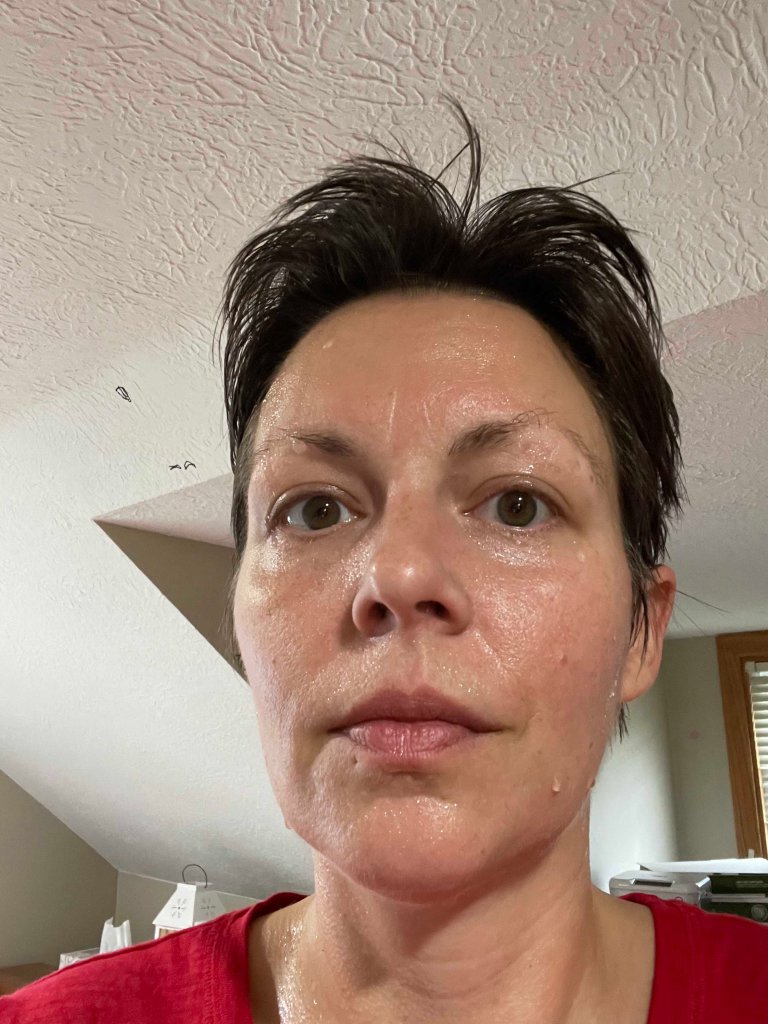



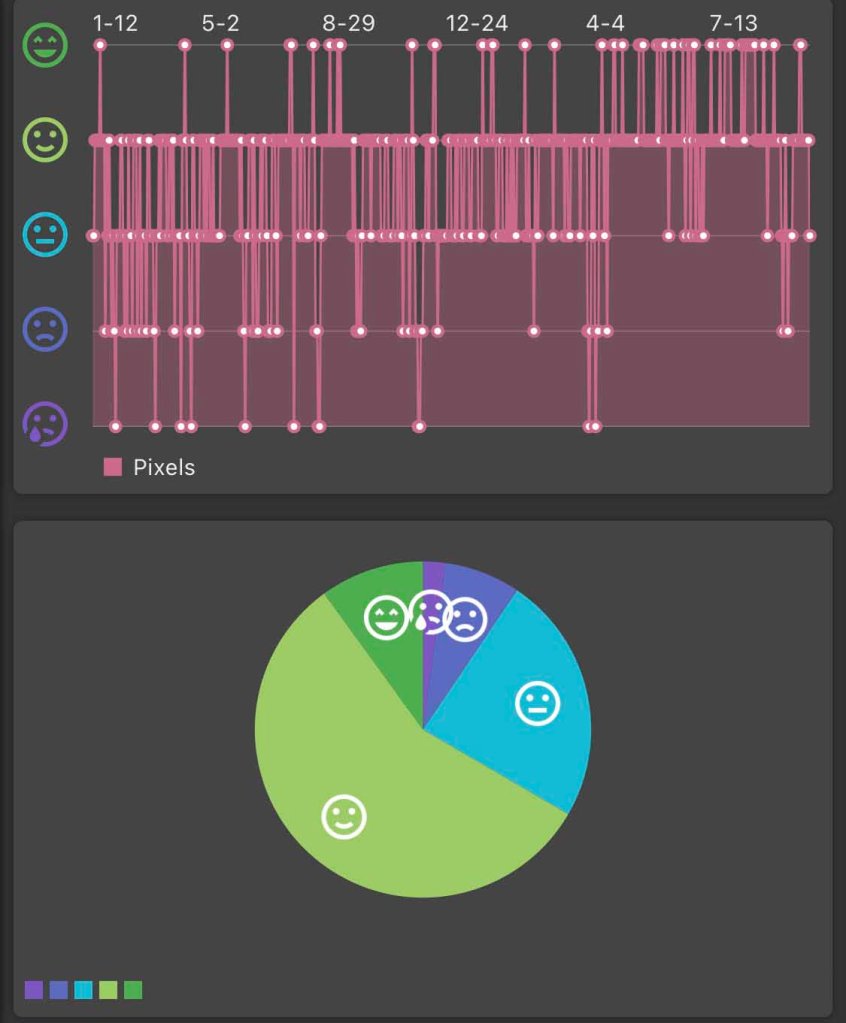

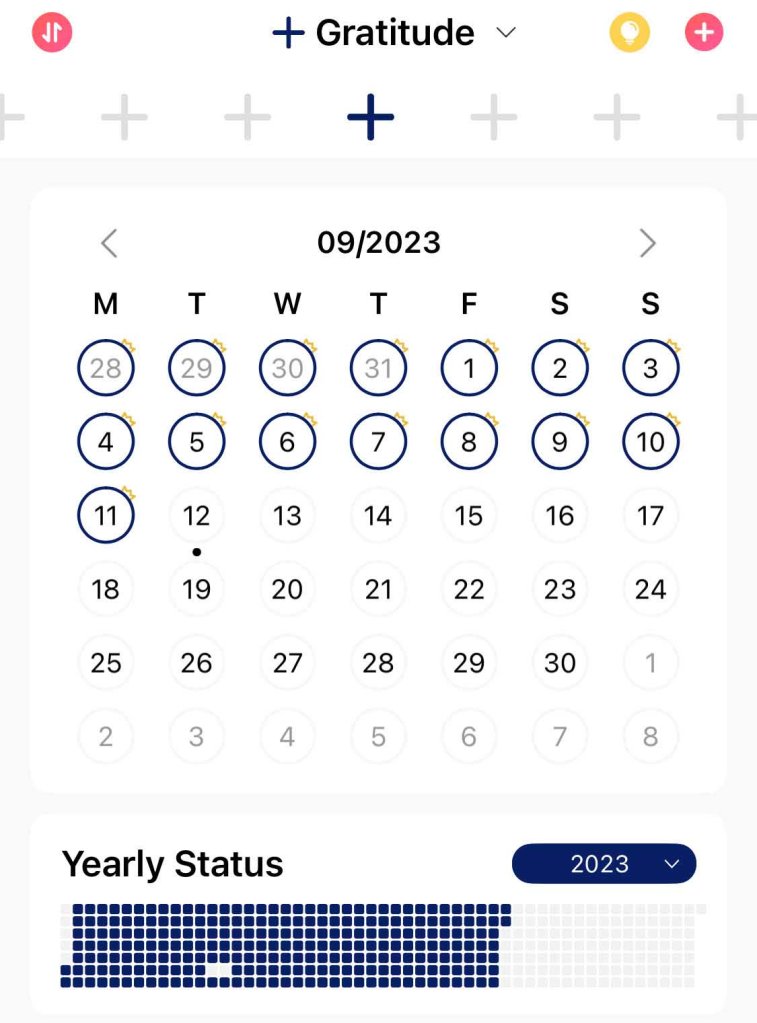
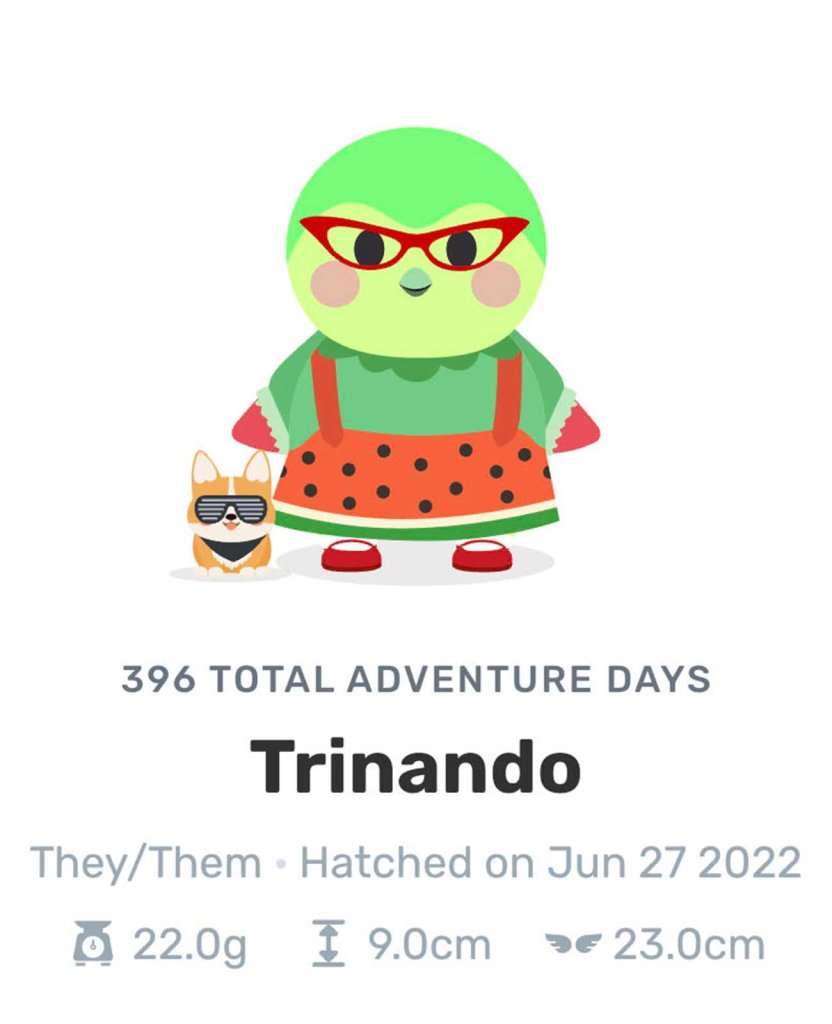




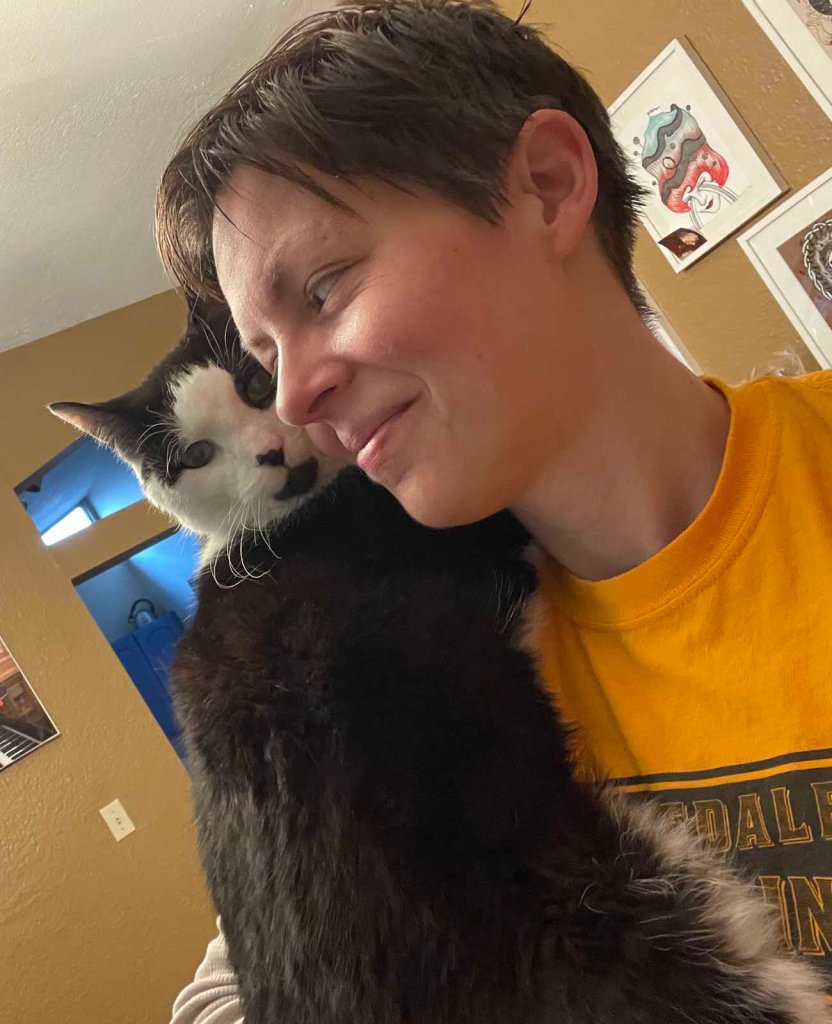



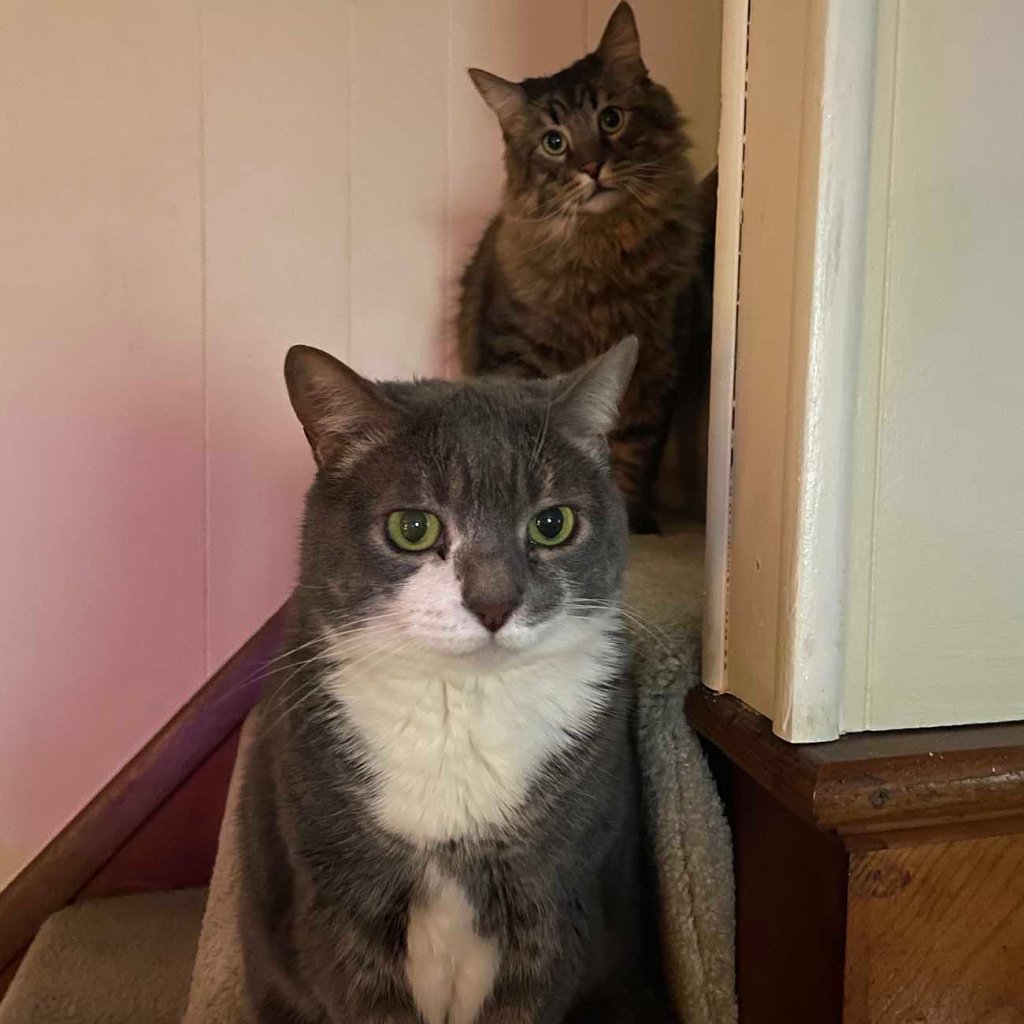



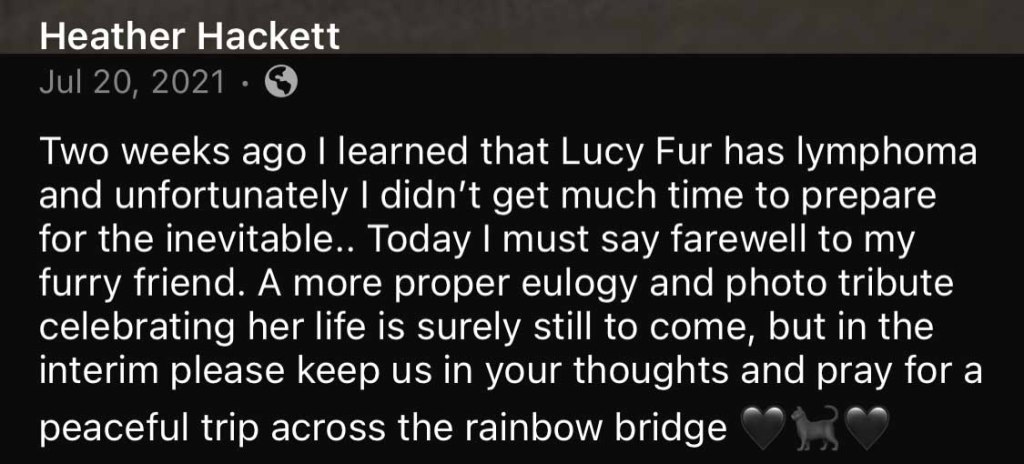
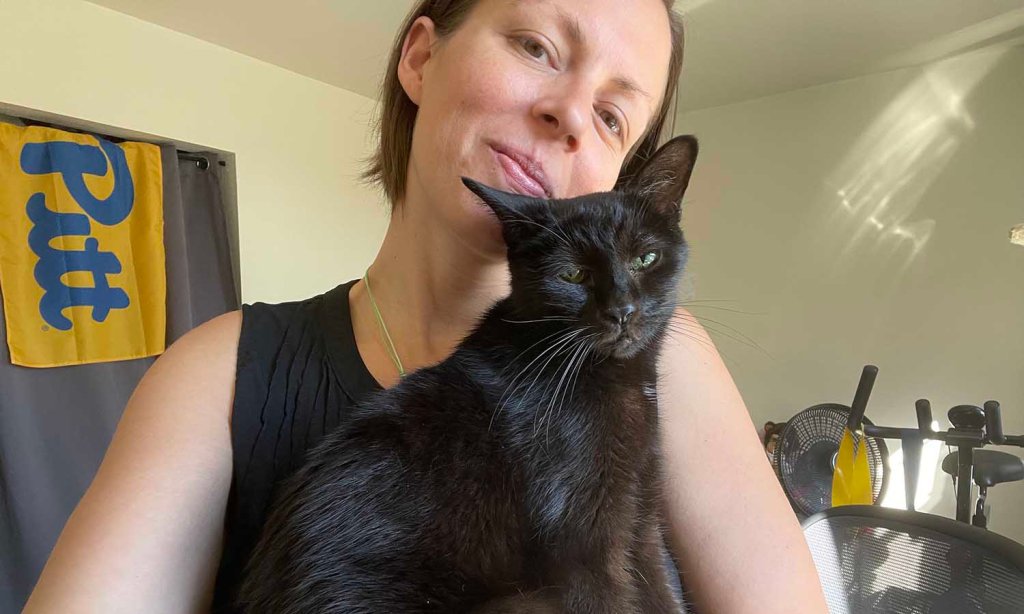
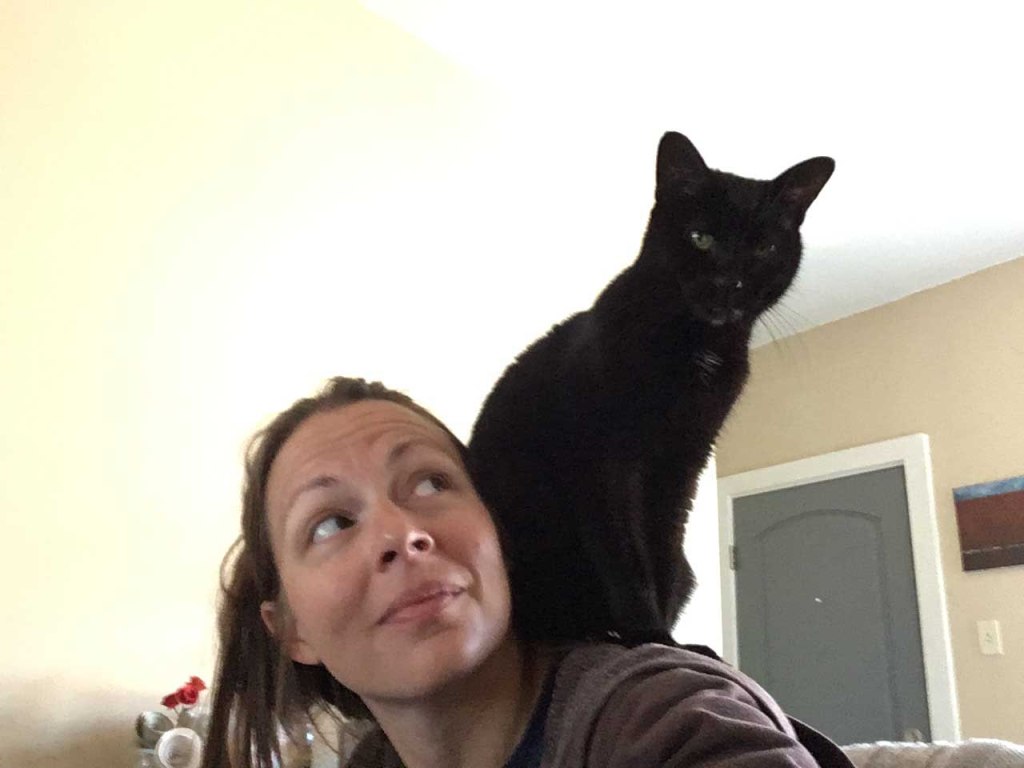

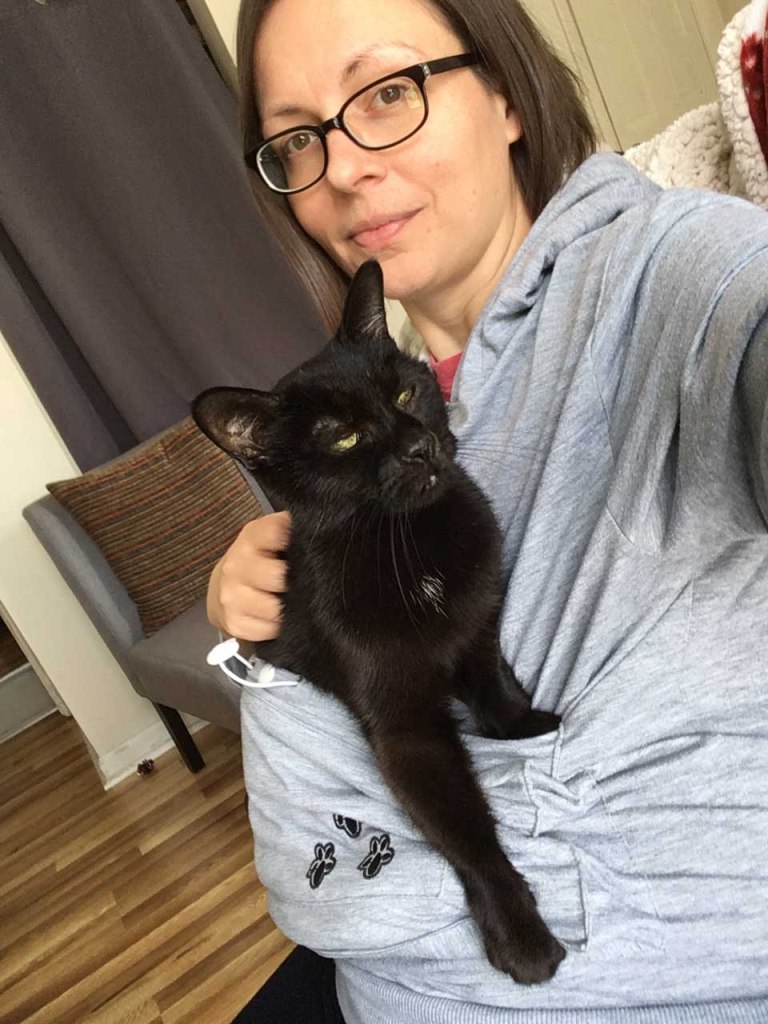
 hezhub.com